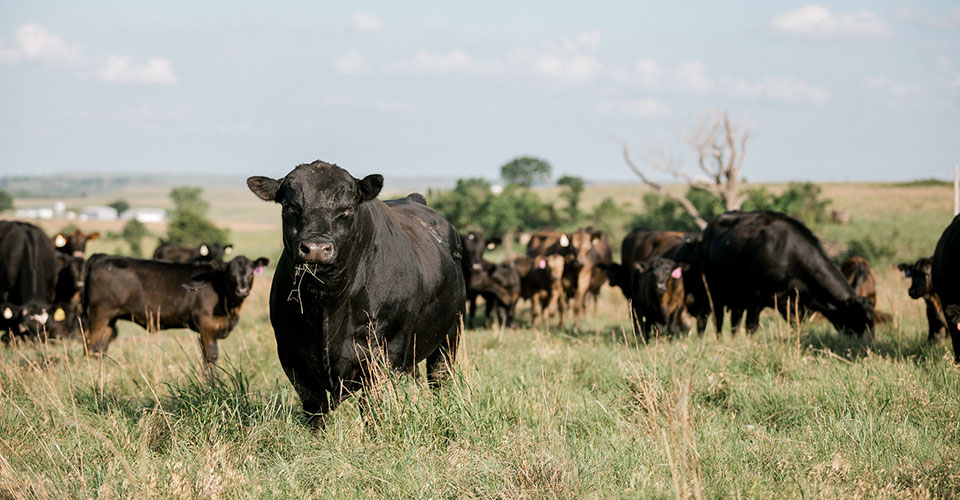
As the grazing season winds down toward fall, Kansas State University veterinarians say cattle producers may want to consider the practice of “creep feeding” to sustain growth in calves.
In a recent episode of “Cattle Chat with the Beef Cattle Institute,” veterinarians Brad White, Bob Larson and Phillip Lancaster discussed potential benefits as well as potential disadvantages.
What is creep feeding?
“(Creep feeding is) providing some source of feed that nursing calves have access to that the dams do not have access to, which can be several different things,” Lancaster said. “We think about a creep feeder where we’re feeding a grain supplement and have a creep gate where the calves can get to the feeder and the cows can’t.”
Lancaster also mentioned creep grazing, where a plot of high quality forage, is sectioned off with a creep gait just for the calves to get into and graze on.
“Starting now and going into the early fall, forage quantity and/or quality are generally going down,” Larson said. “For an adult cow that doesn’t have a growth component, the nutrients that are available in the forage may be perfectly fine to maintain her body condition. But for a young, growing animal…think of it like a teenager raiding the fridge. As the forage quantity and quality decreases, so does the total caloric potential for that calf to consume. Maybe we could add some additional grain or byproduct feeds that would meet some additional calories.”
Pros and cons
Larson said calves could add growth from consuming the additional calories. He said the economic value of creep feeding depends on feed costs, calf prices, forage conditions and how much feed is actually converted into additional gain.
“Often it is an economic question, which is the cost of gain,” Larson said. “But there are a couple of inefficiencies. One is that sometimes I can get better feed efficiency by weaning the calf and just putting them on this diet, rather than keeping him on forage and milk and a creep feed.”
Larson pointed out how there may be unintended consequences.
“The other thing is we have some wildlife predation of the feed,” he said. “Raccoons will get fat if the feed is out there all the time. So it really comes down to your system; is this the most economical way to put some gain on calves? Sometimes the answer is yes, but a lot of times, in my opinion and in my spreadsheet, it would be better to go ahead and just wean the calf.”
What type of feed is best?
Lancaster said a more effective way to add calories in the cow’s diet can be to substitute feed while maintaining a similar amount of foraging.
“Starch feeds like grains have a higher substitution effect on the forge than high fiber type feed,” Lancaster said. “Soybean hulls, wheat midds (and) those types of feed will have a lower substitution effect. Don’t just throw a bunch of corn out there because you don’t want to substitute; you want to supplement if you can.”