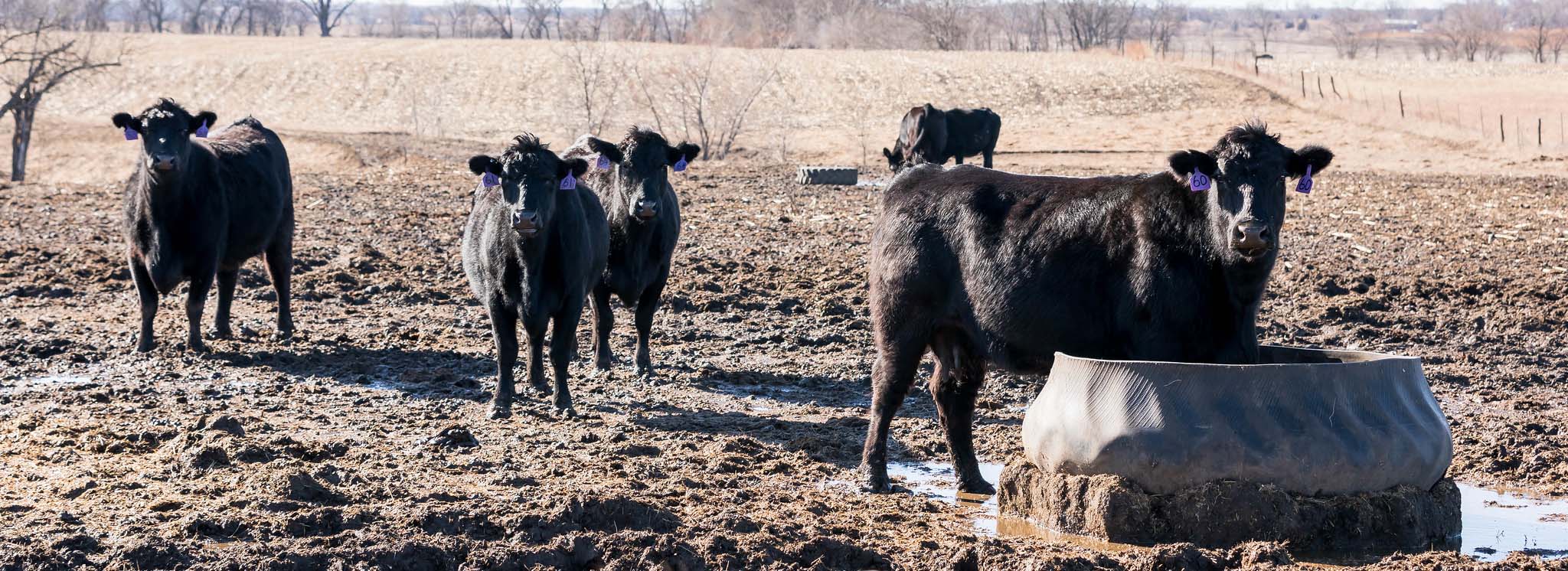
Carefully preparing replacement heifers prior to breeding season is essential for improving conception rates and ensuring cows calve early and remain productive throughout their lifetimes, according to Kansas State University Beef Cattle Institute experts.
During a recent BCI Cattle Chat podcast, K-State beef cattle veterinarians Bob Larson and Brad White and cow-calf extension specialist Jason Warner discussed the importance of evaluating replacement heifers both as a group and as individuals before breeding season begins.
“When we talk about replacement heifers, it’s important to look at the whole group, but also evaluate each heifer on her own,” Larson said. “Individual differences matter, and identifying those early can make a big difference in breeding success.”
Larson and Warner emphasized the value of pre-breeding reproductive exams, noting that these evaluations are efficient and provide valuable insight.
“All of the exams we can do ahead of breeding really don’t take very long,” Warner said. “In a short amount of time, producers can gather information that helps them make better decisions about which heifers are truly ready to breed.”
Monitoring body weight, growth and reproductive readiness is another critical component of replacement heifer development. Heifers that fail to reach an appropriate level of maturity by breeding season are more likely to conceive late or not at all.
“If a heifer is behind going into breeding, it’s hard for her to catch up,” Larson said. “That’s why tracking weights and development is so important.”
The conversation also highlighted the role of nutrition management in preparing heifers for breeding. Warner noted that consistent, balanced nutrition supports puberty attainment and reproductive function, helping heifers conceive earlier in the breeding season.
“Nutrition is one of the biggest drivers of whether a heifer cycles and conceives on time,” Warner said.
Ultimately, Larson and Warner stressed that the goal of heifer development is not just pregnancy, but early calving. “At the end of the day, we want those heifers calving early in the calving season,” Larson said. “Heifers that calve early tend to be more productive over their lifetime.”
Additional information on developing replacement heifers and breeding management is available through the K-State Beef Cattle Institute Cattle Chat podcast. For questions, reach out on social media or send an email to [email protected].