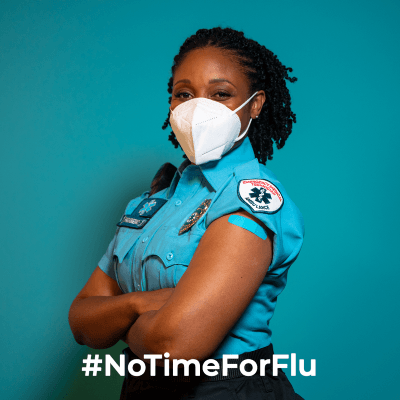
Cases of influenza, and similar type respiratory illnesses are accounting for a spike in visits to hospital emergency rooms.
The Kansas Department of Health and Environment (KDHE) would like to remind Kansans to remain vigilant in their efforts to protect against seasonal influenza and other respiratory illnesses as the number of emergency department and outpatient visits for influenza-like illness is increasing in Kansas and across the United States.
According to the agency, a typical influenza season runs from October to May, with activity usually picking up between December and February. In Kansas, between Dec. 28, 2025, and Jan. 3, 2026, influenza accounted for 5.1% of all emergency department visits. Trends in emergency department visits in Kansas are tracking very similar to the 2024/2025 season, which was generally considered a severe influenza season. When accounting for emergency department visits for all acute respiratory illnesses, the percentage increases to 19.1% of all visits. Workbook: ESSENCE Dashboard
“The best protection we have against seasonal flu each year is vaccination,” KDHE Chief Medical Officer Dr. Dereck Totten said. “There is still time to get a flu vaccine this season. The vaccine has been shown to not only reduce the risk of getting the flu but also to protect against the potentially serious complications of the flu, especially for immunocompromised individuals.”
As would be expected at this point in the season, Kansas is mostly seeing Influenza A virus circulating. A new influenza A(H3N2) virus subclade J.2.4.1, also recently renamed “H3N2 subclade K,” was identified by the US Centers for Disease Control and Prevention (CDC) in August 2025. Among 436 influenza A(H3N2) viruses collected in the United States since Sept. 28, 2025, that underwent additional genetic characterization at CDC, 91.5% belonged to subclade K. Advanced testing performed by the Kansas Health and Environment Laboratories on 13 influenza A(H3) viruses received since Sept. 28, 2025, found that 92% belonged to subclade K.
Although subclade K emerged after the 2025-26 vaccine strains were chosen, early estimates of vaccine effectiveness in preventing influenza-related hospitalization suggest that the vaccine is performing as expected among both children and adults. More information on vaccine effectiveness in the United States will be shared as sufficient data has been collected.
Along with getting the flu vaccine, below are some other precautions to consider as preventative measures when it comes to protecting against the flu and other respiratory illnesses.
- Try to avoid close contact with sick people.
- Stay home until fever-free for 24 hours without the aid of fever reducing medications and overall symptoms are getting better.
- Cover your nose and mouth with a tissue when you cough or sneeze. Throw the tissue in the trash after you use it.
- Wash your hands often with soap and water, especially after you cough or sneeze. Alcohol-based hand cleaners are also effective when soap and water is unavailable.
- Avoid touching your eyes, nose or mouth. Germs spread easily this way.
- Clean and disinfect surfaces and objects that may be contaminated with germs like the flu.
More prevention and treatment information can be found on the KDHE website’s Influenza page.