Food insecurity is increasing in households across Kansas.
Data from the Kansas Food Bank shows the number of households served by hunger relief programs has increased by 88% since last year. The organization provides food and supplies to pantries, soup kitchens and other hunger relief programs in 85 counties across the state.
On a chilly morning in Frontenac, Kansas, people were lining up in the Sacred Heart Church’s food pantry’s parking lot, bundled warmly and waiting for a semitruck to unload a variety of food. The food truck, provided by Feeding America and the Kansas Food Bank, comes to the parking lot on the second Friday of every month.
Resident Tina Knight had been waiting in line since 5 a.m.
She’s been using the food truck’s services for three years and noticed a steady increase in people needing help. Some people drive or carpool to get to the event.
Another resident, Jerome Cook, said he was grateful for the support the pantry provides.
Kansas Food Bank CEO Brian Walker attributes the increase in food insecurity to the higher cost of groceries and gasoline. He said food is one of the first things people cut back on if they can’t afford it.
“It’s really hard to get rent assistance, or it’s really hard to get assistance with gasoline and you have to put that in your car to get to work,” he said.
Walker said older adults are most affected by food insecurity because they’re more likely to be on a fixed income.
He said people in rural areas can be impacted more because they have to drive farther distances to get food or assistance. His organization has traveled to many remote areas of Kansas, where food pantries or kitchens aren’t easily accessible, to offer pre-made snacks and fresh produce for anyone in need.
“And so those are issues that we’re constantly looking at and trying to figure out what’s the best way to serve those areas of the state that struggle that way,” he said.
The Kansas Food Bank also coordinates with other nonprofits to make sure they have proper food and supplies.
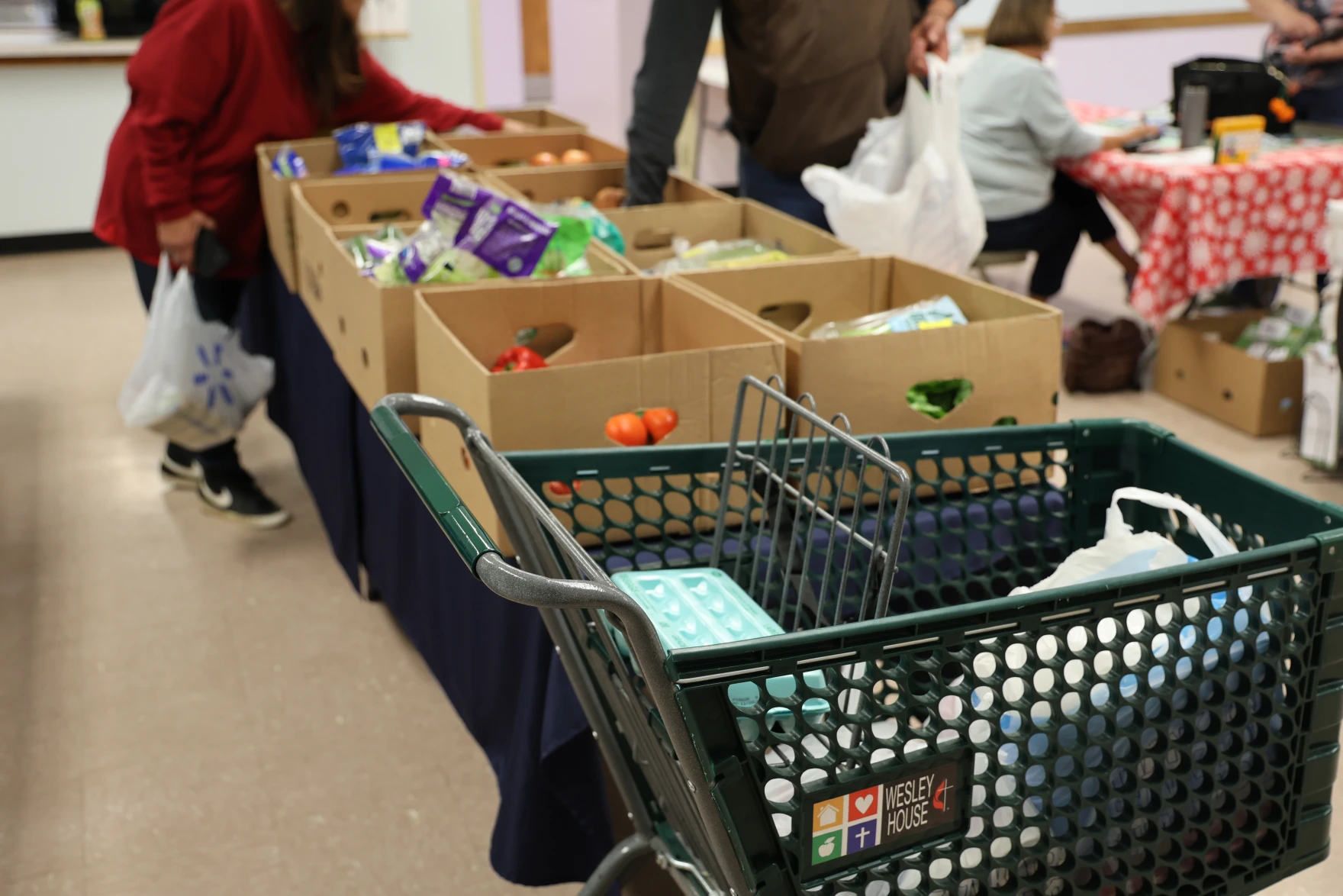
One such partner is Wesley House in Pittsburg, run by three full-time staff plus volunteers. It serves meals and fresh fruit and vegetables on a first-come, first-served basis.
Volunteer Cindy Hisquierdo works on Tuesdays and assembles a list of people visiting, how many people are in their family and what they need that day.
“And most of them are very friendly — they’re grateful for what they’re getting,” Hisquierdo said. “So I always feel very glad that I can help.”
Wesley House had to increase its monthly budget by $1,000 because of rising need and grocery costs. It has already surpassed next year’s budget.
Daily service numbers have reached record highs over the past year. In July, for example, Wesley House served 519 households, the most since it opened.
Executive Director Matt O’Malley points to changes to the Supplemental Nutrition Assistance Program as one reason why people are losing their benefits and becoming more food insecure.
Commonly referred to as food stamps, the program had its funding reduced last year by the passage of the One Big Beautiful Bill, an omnibus bill approved by Congress and signed by President Donald Trump.
The bill also created more workforce requirements for SNAP eligibility.
The Trump administration has now proposed further changes to eligibility for the Temporary Assistance for Needy Families and SNAP. Critics say 6.3 million people across the U.S. could lose food assistance.
O’Malley said he’s grateful for the charity Wesley House can provide, but hopes for systemic change.
“Until we see policies, systems and environments change, we’re going to continue to see really high service numbers,” he said.
_ _ _
Story via Kansas NewsService