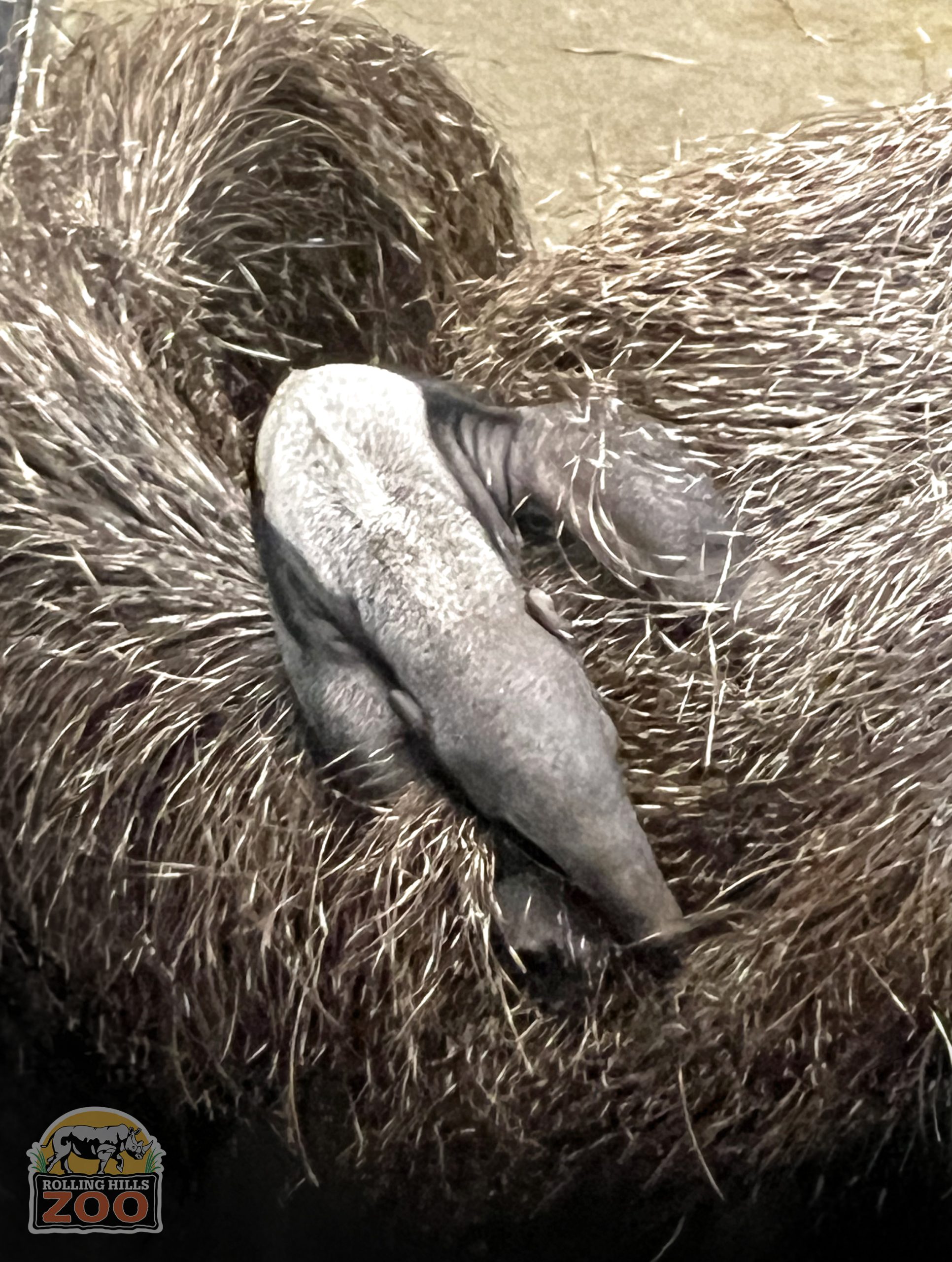
The successful birth of a giant anteater pup is the first in the history of Rolling Hills Zoo.
According to the Zoo, the pup was born to mother,Ruth, and father, Pumpkin, on May 19, 2026.
This is Ruth’s first offspring and the first pup sired by Pumpkin. The newborn is estimated to weigh between 1.5 and 2 pounds. At this time, the pup’s sex is still unknown, as determining gender in giant anteaters can be very difficult and may take some time.
Animal care staff closely monitored the birth and early milestones – critical to a newborn giant anteater’s survival and development. One of the most important moments occurs shortly after birth when the pup must climb onto its mother’s back. The pup successfully climbed onto Ruth within approximately one and a half hours, falling within the normal timeframe.
The next important milestone was nursing, and the keepers were able to hear suckling the following day, indicating the pup was successfully feeding.
Additional milestones animal care will be watching for include opening its eyes in the coming days, followed by continued growth, increasing strength, gradually becoming more inquisitive and independent.
“Ruth has been a very attentive mother,” said Mark Echevarria. “Pumpkin is not involved in the rearing process, so for him it’s business as usual.”
Giant anteater pups are well known for riding on their mothers’ backs for up to a year. Their unique fur patterns closely match their mothers’, helping provide camouflage while riding.
Giant anteaters are native to Central and South America and primarily feed on ants, termites, and similar insects. Using their long snouts and sticky tongues, they can consume thousands of insects each day.
Anteaters are generally solitary animals, interacting mainly for breeding purposes. Because of this, the bond between a mother and her pup is one of the few prolonged social relationships they experience. Young anteaters typically remain with their mothers for one to two years before becoming independent.
For the first six months, the pups receive their nutrients from their mother’s milk before transitioning to a diet primarily of ants and termites. As they grow, their claws become stronger and longer, eventually allowing them to tear apart logs and insect mounds to forage on their own.
While excellent for digging and defense, their large claws make it difficult for adults to physically carry their young, which is why pups spend so much time riding on their mothers’ backs.
Ruth and Pumpkin came to Rolling Hills Zoo on a breeding recommendation by the SSP (Species Survival Plan) of the AZA (Association of Zoos & Aquariums).
The giant anteater’s conservation status is Vulnerable, with fewer than 5,000 individuals estimated to remain in the wild. Their primary threats include habitat loss as it is rapidly cleared for agriculture and development. Wildfires, often set for agricultural purposes, can trap and kill these slow-moving animals. Additional threats include vehicle collisions and hunting, as giant anteaters are sometimes killed for meat, viewed as pests, or targeted for the illegal wildlife trade.
Guests visiting Rolling Hills Zoo may be able to catch glimpses of Ruth and her pup in the coming weeks as the young anteater continues to grow and thrive under the attentive care of its mother.