Dry, cool conditions across much of Kansas are creating favorable environments for brown wheat mites, and one Kansas State University researcher says that it is prompting concerns for wheat producers as the growing season progresses.
Anthony Zukoff, a K-State Extension entomologist, said reports of brown wheat mite activity have been widespread, particularly in western Kansas, with cases now extending into central parts of the state.
“These mites like it dry and cool, so they’re really thriving under the conditions we’ve had this year,” Zukoff said.
Brown wheat mites are considered an early-season pest in wheat and triticale and can cause damage that closely resembles drought stress, making proper identification critical for producers.
“Their damage can mimic drought stress, so we shouldn’t just assume an unhappy wheat field is only drought-related,” Zukoff said.
How to Identify Brown Wheat Mites
Producers scouting for brown wheat mites are encouraged to check fields during the warmest part of the day, when mites are most active and visible on wheat leaves.
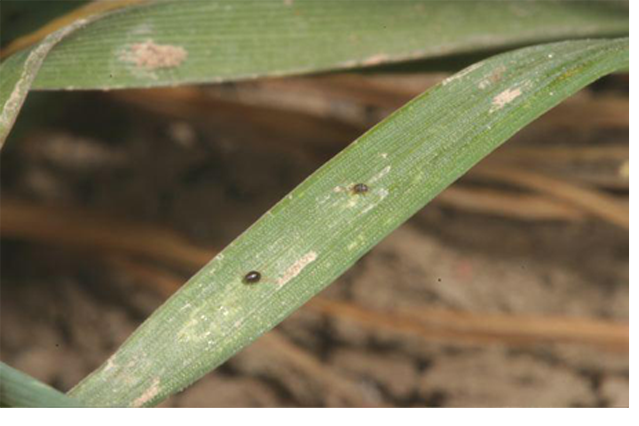
“If they’re present, you’ll see them crawling on the leaves as little brown specks, especially in sunny conditions,” Zukoff said.
Feeding damage often appears as yellow stripping along the leaves, and under heavy pressure, leaf tips may die back, giving plants a scorched appearance.
When determining whether treatment is necessary, Zukoff said there is no precise factor, but fields with several hundred mites per linear foot and visible stress may warrant action.
“If you walk into a field and they’re easy to see and the wheat is showing damage, you probably need to consider a treatment,” he said.
However, timing and weather conditions should also factor into management decisions. Brown wheat mite populations typically peak in mid- to late April before naturally declining.
“A good, driving rain can knock populations back significantly, so it’s important to reevaluate fields after rainfall before making a decision,” Zukoff said.
In addition to scouting for active mites, producers can also look for eggs to better understand population trends. Zukoff noted that reddish-bronze eggs indicate active generations, while white eggs signal a shift toward dormancy and declining risk.
“When you start seeing more white eggs than red ones, that population is naturally declining and treatment may no longer be justified,” he said.
Management and Control Considerations
If treatment is needed, chemical control options are limited, with products such as Dimethoate and Chlorpyrifos providing effective control. However, these insecticides can also eliminate beneficial insects in the field.
“These products will take care of the mites, but they’ll also kill beneficials, so it’s important to only treat when necessary,” Zukoff said.
Although brown wheat mites are typically more common in western Kansas, dry conditions this year have allowed populations to expand farther east, with reports of activity as far as the Salina area.
“Even in areas where mites are not usually a problem, it is worth getting out and checking fields this year,” Zukoff said.
More information on the wheat growing season is available online from the K-State Agronomy eUpdate or from local K-State Extension offices in Kansas.