A documentary about the police raid of the Marion County Record is set to premiere at the Sundance Film Festival in early 2026, more than two years after law enforcement stormed the newspaper office, the publisher’s home and a city councilwoman’s home.
Director and producer Sharon Liese says the film looks beyond the First Amendment implications of the raids and dives deeper into the small town of Marion in a way the public hasn’t seen before. She called it “a canary in a coal mine” type of story.
“The story that we eventually told is not what you would expect,” Liese said. “It’s not all about the First Amendment. It’s about what happens between a newspaper and its community in a small town. It’ll make people think about what journalism really is and what people really want journalism to be.”
“Seized” will premiere at the Sundance Film Festival Jan. 22 through Feb. 1. It is one of 10 documentary films chosen to compete in the U.S. documentary category and was chosen out of thousands of submitted films.
Marion Police Chief Gideon Cody and officers carried out a search warrant on the Record newsroom, editor Eric Meyer’s home and a councilwoman’s home in August 2023. The search contributed to the death of Meyer’s 98-year-old mother. Days later, staff published their weekly paper with the headline “Seized but not silenced.”
Kansas Reflector was first to report on the raids, which were based on a nonexistent crime and defied federal and state laws that project journalists. The news brought immediate international scrutiny to the small town of Marion.
Cody is set to stand trial next year for telling a witness after the raids to delete text messages.
Liese, known for other documentaries such as “Transhood” and Emmy-winner “Flagmakers,” was inspired to follow Marion’s story with it being only a few hours away from her home in Overland Park, even though it wasn’t her usual type of story to pursue.
“I was a little hesitant at first because I’d never started with pursuing a project that already had international visibility,” Liese said. “Every documentary filmmaker from New York City to LA is going to be clamoring to get this story, but then again it’s only two hours from my house. So I just thought I’d give it a whirl.”
Record publisher and editor Eric Meyer agreed to participate in a documentary as long as he had no financial or editorial control, and selected Liese because of her dedication to telling the story beyond just the raids. What mattered to him was journalistic storytelling, he said.
“Sharon devoted a huge amount of time and effort into this to the point she’s practically a member of the staff here,” Meyer said. “I was never concerned about the journalistic quality. She likes to tell untold stories, whether they’re stories that liberals or conservatives would like.”
“Seized” producer Paul Matyasovsky has worked with Liese since 2023, including the film “Parker,” which was featured at Sundance in 2023. He was drawn to the story similarly to Liese after seeing it on the news.
“I heard about the story the day it happened and was fascinated by it from the beginning,” Matyasovsky said. “I’ve also spent a lot of my career in small towns, and they’re always very unique. That drew me in along with the freedom violations and constitutional questions.”
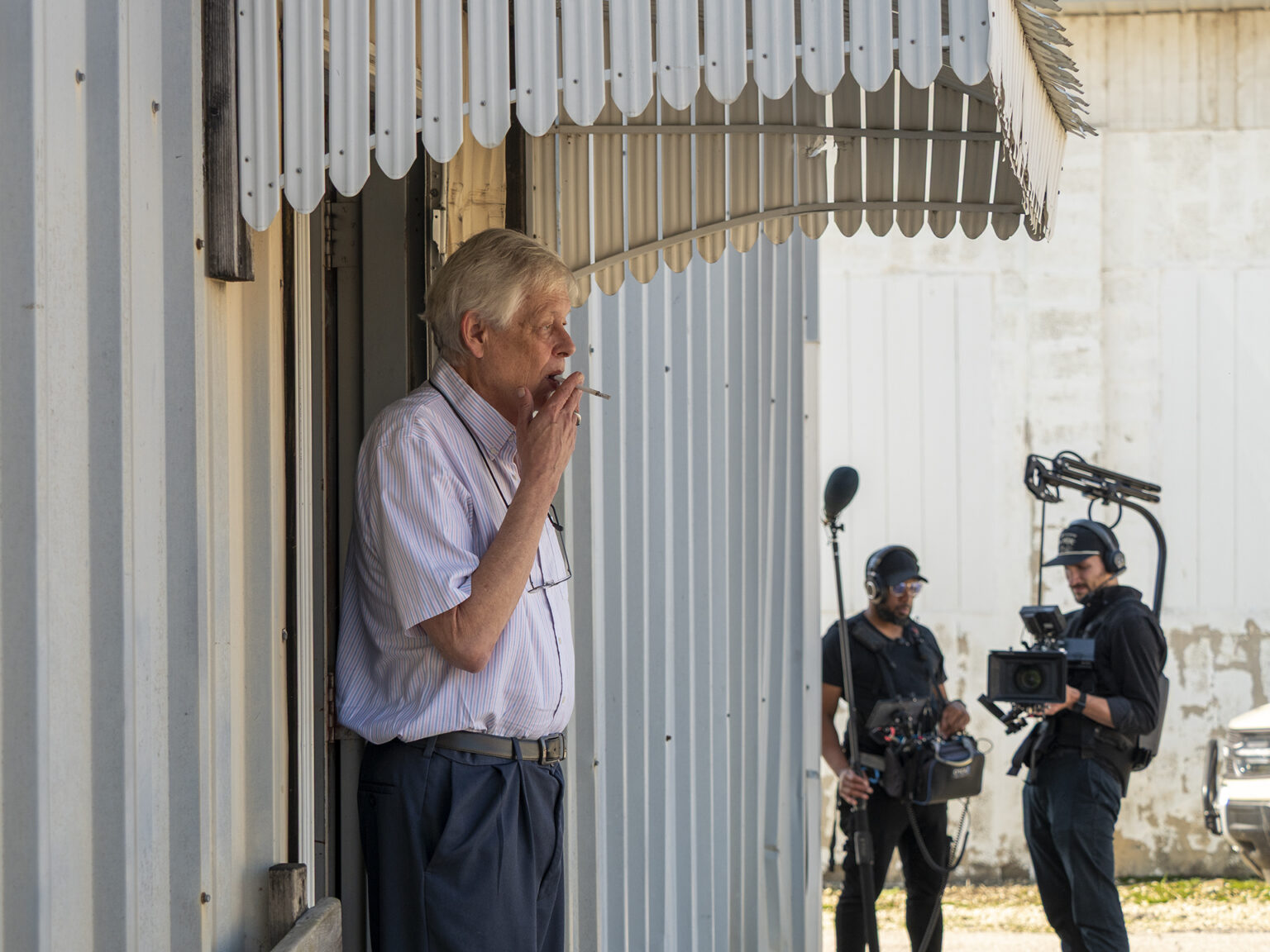
The more time the small film crew spent in Marion, the more the story evolved as more community members agreed to be interviewed for the film.
“We wanted to feature the voices that the national media didn’t,” Liese said. “There’s the layer of small town politics, small town dynamics and the power struggle in a small town between a newspaper and its government. We spent two and a half years there. We really got to know the people in the town.”
Matyasovsky said throughout interviews for the documentary, the crew never wanted to take someone’s words out of context or manipulate anyone’s perspective.
“The town of Marion felt that they were portrayed in the national media as ‘Hickville’ or a bunch of people who didn’t understand or respect anybody,” Matyasovsky said. “I hope that it’s clear that isn’t true. This bad thing should have never happened. But that also doesn’t mean that every single individual in the town is bad. And we all need to work hard to try to prevent these things from happening in the future.”
Meyer said he hopes the documentary will help break stereotypes of the people of Marion along with shining a light on the long-term implications of the raids.
“We need to make sure that we understand that this is a town where, yes, something bad happened here. But we’re fixing it,” Meyer said. “We want to show this is a town where we won’t tolerate government overreach and bullying. Hopefully, the message is that Marion isn’t the backwater where they try to sit on the First Amendment, but rather when things come up, we deal with it.”
Through telling the story of Marion, “Seized” will serve as a reminder to the nation to remain holding people of power accountable, Meyer said.
“This is all part of a trend that’s going on in the country of people wanting to use positions of power to bully and limit free speech,” Meyer said. “It’s the fundamental nature of democracy. We shouldn’t hide our heads in shame. Sometimes the best thing to do when something bad happens is to get out in front of it and not let it happen again.”
_ _ _
Story via Kansas Reflector