This time of year marks the period when vehicle-deer collisions increase, and Kansas roadways are no exception.
According to the Kansas Department of Transportation, while deer can be spotted near roadways any time of the year, motorists should be especially vigilant in the fall for deer crossing roadways due to the “rut,” or mating season, a time when deer are frequently on the move.
“When a deer enters the roadway, drivers may be tempted to swerve. That can lead to a loss of control, leaving the roadway or a collision with oncoming traffic,” said Kansas Highway Patrol Lt. Chad Crittenden. “Drivers are often safer when they brake firmly and stay in their lane.”
That’s why the Kansas Department of Transportation, Kansas Highway Patrol, Kansas Department of Wildlife and Parks and AAA Kansas are working together to raise awareness and help drivers avoid collisions with deer.
“Deer are focused on mating and not paying attention to hazards like vehicles,” said Levi Jaster, KDWP Big Game Coordinator. “Bucks are looking for does, and with crops out of the fields and leaves off the trees, deer have fewer places to stay concealed. That means motorists are more likely to encounter deer on or near roadways, especially at dawn and dusk.”
One person was killed and 692 people were injured in the 10,742 deer-vehicle crashes on Kansas roadways in 2025. Across the state, 40% of all single-vehicle crashes in 2025 involved a collision with a deer.
Andrew Booth, Kansas Turnpike Authority Safety Coordinator, encourages motorists to stay focused, reduce distractions and drive at a safe speed to increase safety when deer are near the roadway.
“In the event a driver hits a deer, help is available by dialing *KTA (*582) when traveling on the turnpike or *47 to reach the Kansas Highway Patrol,” Booth said.
Shawn Steward, Public Affairs Manager for AAA Kansas, said that besides the inconvenience of your vehicle damage, the cost of repairs may put a serious dent in your wallet.
“AAA insurance statistics show the average claim in Kansas for an animal strike in 2025 was almost $7,900 – up 42% in the past five years,” Steward said. “This is largely due to advanced vehicle technology such as cameras and sensors.”
Roadway safety officials suggest drivers:
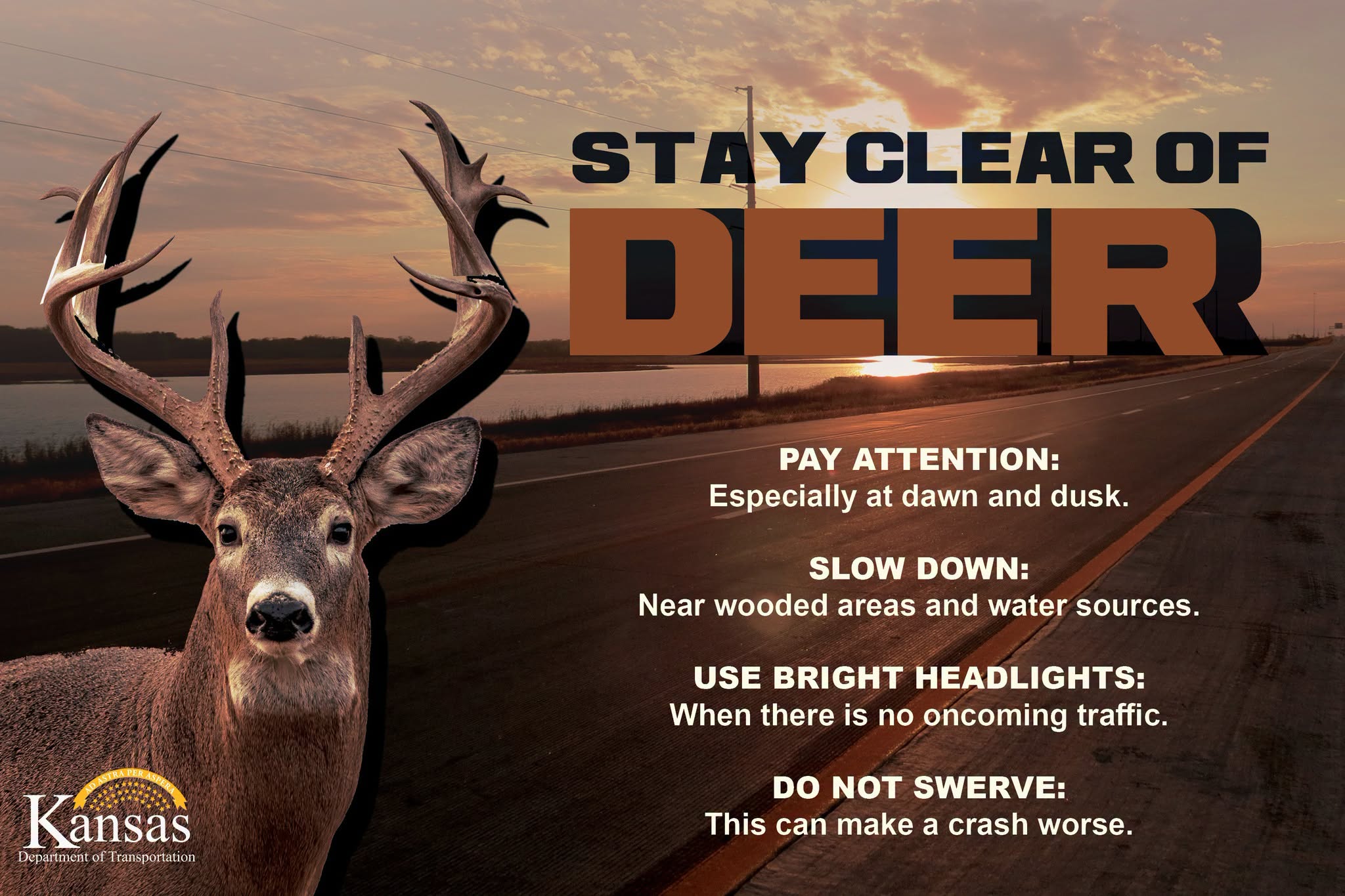
- Be watchful at dawn and dusk; deer are more active and seldom travel alone.
- Reduce speeds near wooded areas and water sources.
- Always wear a seat belt and use appropriate child safety seats.
- Use bright headlights when there is no oncoming traffic. The deer’s eyes often reflect.
- Do not swerve. This can cause motorists to veer into oncoming traffic, run off the road, hit objects or overturn.
- If you strike a deer, move the vehicle to the roadway’s shoulder and call law enforcement: KHP dispatch at *47, turnpike users at *582 or local law enforcement at 911.
- Contact your insurance company to report damage.
NOTE: Click this link, Deer/Vehicle Stats, to view the statewide vehicle-deer statistics compiled by KDOT for the past five years followed by county stats.