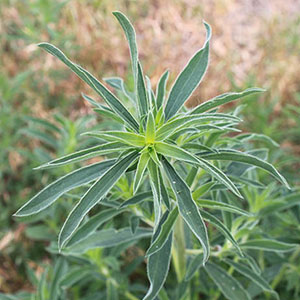
Kansas producers are facing weed management challenges in grain sorghum, wheat stubble and soybean fields, according to Kansas State University weed management specialist Sarah Lancaster.
Lancaster said there aren’t many post-emergence herbicide options for grain sorghum currently on the market.
“Aim is labeled for post-emergence use in grain sorghum, but it’s only effective on very small pigweeds,” Lancaster said. “2,4-D and dicamba are probably the most effective on Palmer amaranth, but they can also cause injury to grain sorghum, such as lodging and brittle stems.”
According to Lancaster, Aim and Huskie have a better chance at being effective if the weeds are small.
“By small, I mean four inches or less,” she said. “The Huskie label specifically states four inches, and coverage is important. The smaller the weed, the better your chances of success.”
Humid conditions can improve herbicide performance significantly, according to Lancaster.
“If the plants are not growing well, the herbicides are not going to work as well,” Lancaster said. “We’ve seen temperatures into the upper 80s, which can reduce herbicide effectiveness, but we’ve also had high humidity across much of the state which generally increases efficacy – especially for contact herbicides like glufosinate (Liberty).”
Lancaster expressed particular concern about wheat stubble fields, where Palmer amaranth, kochia and volunteer wheat are rapidly emerging. She said timely herbicide applications are essential to prevent weeds from going to seed.
“I’ve seen fields that are just green with palmer amaranth, kochia and volunteer wheat,” she said. “Timely applications are crucial.”
While newer tools like drones are gaining interest, Lancaster cautions that they may not be as effective or reliable as some producers hope.
“Drone applications are not as straightforward as some may think,” she said. “There are very few products actually labeled for this type of application.”
For more guidance, Lancaster recommends the K-State Agronomy eUpdate and the Chemical Weed Control Guide as essential resources for producers navigating this challenging season.
Brand names mentioned in this article are for identification purposes only and are not intended to represent an endorsement of any specific product.