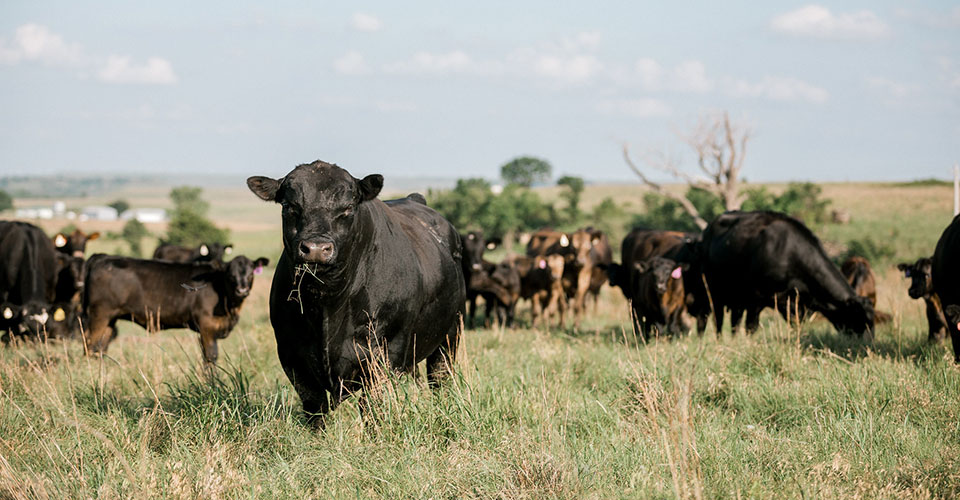
Today’s beef cattle are bigger than they were a generation ago, and according to Kansas State University experts, that shift may represent more than a passing cycle in the cattle industry. As producers face rising costs, changing technologies and evolving market demands, larger carcass weights are increasingly becoming part of the industry’s approach to efficiency and profitability.
In a recent episode of the BCI Cattle Chat podcast K-State veterinarian Bob Larson and beef cattle nutritionist Phillip Lancaster explored how efficiency in the cattle industry has evolved and what factors may continue shaping herd and carcass sizes moving forward.
“The way we think about efficiency has changed,” Larson said.
Historically, feed efficiency was often measured by how effectively cattle converted feed into live weight gain. Today, however, producers and industry leaders are increasingly evaluating efficiency on a carcass basis rather than simply live animal weight.
Lancaster explained that while feed efficiency naturally declines as cattle are fed to heavier weights, carcass performance tells a more complete story.
“We feed cattle heavier and heavier, and feed efficiency decreases over time,” Lancaster said. “But the proportion of gain that transfers to carcass changes. The decrease in feed efficiency actually improves when you look at it on a carcass basis instead of a live-weight basis.”
Larson added that economics also play a significant role in the push toward larger carcasses.
“One factor is the initial price of the animal itself and spreading that cost over more pounds sold,” Larson said.
At the same time, cattle producers must balance numerous changing inputs, including feed costs, labor, time and environmental conditions.
“The complexity is that all of those inputs are always changing,” Larson said. “If you can put more pounds on a carcass before it goes to the packer, relatively speaking, many of the inputs remain similar. The question becomes whether the carcass eventually gets too large and creates challenges.”
Even with those concerns, Larson believes larger finished cattle are likely here to stay.
“I think this is probably the new normal,” Larson said. “I don’t see us going back to the finished cattle size we had 20 years ago because technology and management have changed.”
In addition to management and technology advancements, policy decisions may also influence future cattle production trends.
Larson pointed to the Conservation Reserve Program, commonly known as CRP, as one example. The federal program pays landowners to remove environmentally sensitive land from agricultural production and establish conservation practices such as grasses or trees.
“If you change policies like CRP, there are winners and losers in different parts of the country,” Larson said. “Those policies tend to have long-lasting impacts.”
Lancaster noted that feed costs are currently relatively favorable compared to cattle prices, which may create opportunities for expansion in some production systems.
“Feed is cheap right now compared to the price of cows,” Lancaster said.
He also discussed the importance of grazing management and the long-term sustainability of land resources.
“Managed grazing can be very beneficial for the landmass, but unmanaged grazing can create issues,” Lancaster said.
Looking ahead, Lancaster said evolving production models could also influence the industry, particularly as consumer demand for beef remains strong.
“I would be curious to see more dual-purpose operations with beef-on-dairy systems because consumer demand for beef is currently higher than milk,” Lancaster said.
As cattle markets, production systems and consumer demands continue evolving, Larson and Lancaster emphasized that producers must remain adaptable while balancing efficiency, profitability and sustainability.
To learn more about what trends the BCI team thinks may affect the beef industry, listen to the full episode of the Cattle Chat podcast.