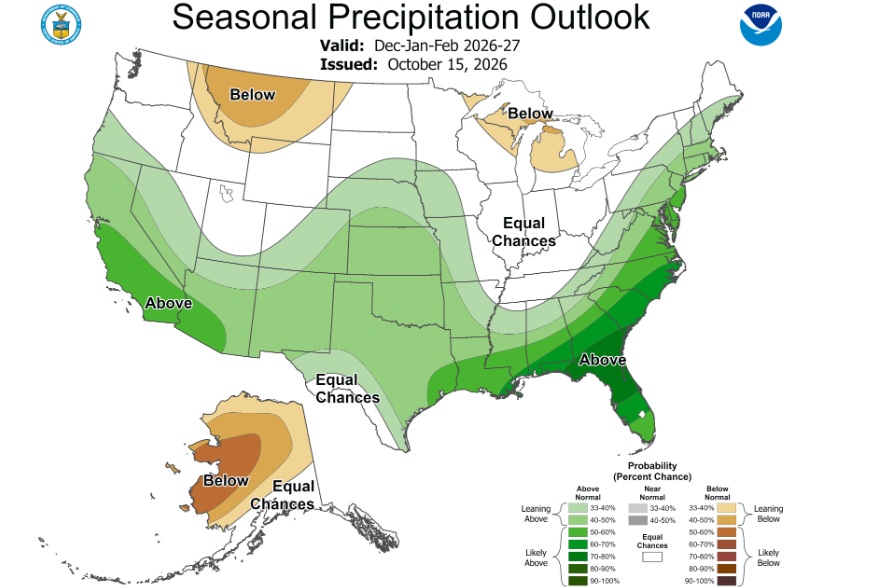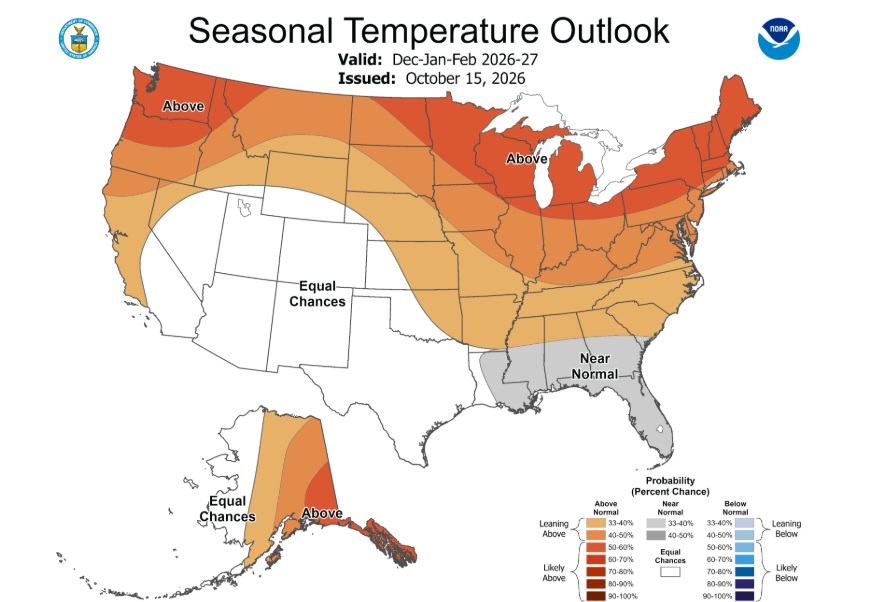
As the National Oceanic and Atmospheric Administration (NOAA) officially tracks a strong-to-very-strong El Niño shaping up for the winter months, National Weather Service forecasters are drawing a clearer picture of what the seasonal climate pattern means for the United States , and for Kansas,
For Kansas, the incoming El Niño brings mix of milder temperature signals and maybe above normal moisture, with implications for agriculture and drought recovery.
According to NOAA’s seasonal climate data and regional outlook, a warming influence associated with El Niño is expected to extend into Kansas and neighboring Nebraska. While the most pronounced and consistent warm anomalies are generally mapped across the northern tier of the country, forecasters note that background climate change combined with this strong El Niño pattern creates a real potential for a milder-than-average winter across the region.
For Kansans, this could translate to fewer sustained stretches of bitter, arctic cold, potentially easing home heating demands during the peak of winter. However, meteorologists frequently emphasize that “milder” does not mean entirely winter-free; episodic cold snaps and regional winter storms remain a staple of the Plains climate.
Precipitation trends remain a focal point for the state’s agricultural industry. NOAA’s outlook leans toward wetter conditions across parts of the Southern Great Plains, offering a promising signal for drought recovery.
Kansas has experienced a volatile cycle of weather over the past yea, ranging from extended hot and dry summer stretches to sudden, harvest-disrupting rains. An El Niño winter often alters storm tracks, potentially favoring moisture improvements. For wheat farmers and livestock producers, any sustained moisture heading into the late winter and early spring is vital for recharging soil profiles ahead of the 2027 growing season.
Historical El Niño data suggest that severe springtime weather, such as aggressive tornado and hailstorm frequency, tend to be suppressed across portions of the central and southern U.S. during strong El Niño phases compared to La Niña years.