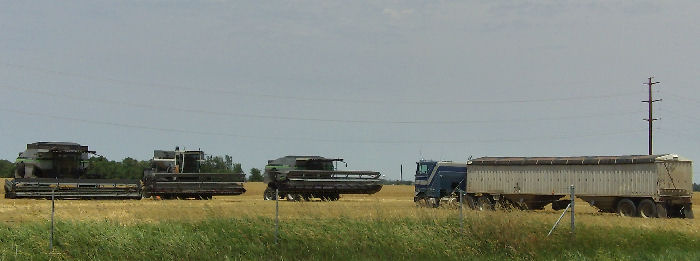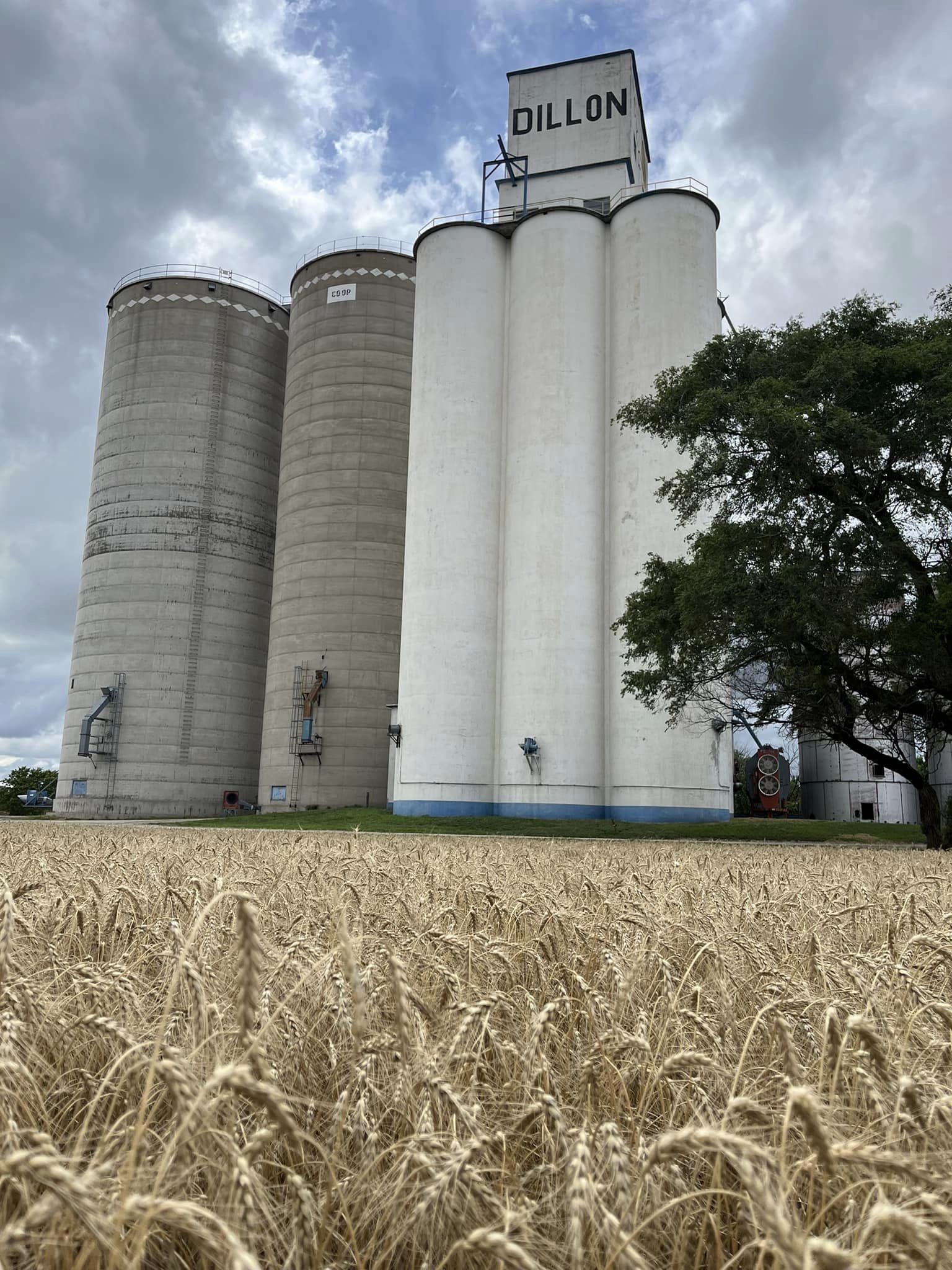
Harvest is over halfway complete, resulting in what may be one of the earliest harvests in recent memories. Drought conditions and late freeze events are top contributing factors to the early harvest. While the wheat is mostly ready across the state, rains are still keeping some farmers out of the fields.
Jay Armstrong, a farmer from Atchison County, reported starting harvest on June 16 and finishing up right before the rain started on June 19.
“The Soft Red Winter (SRW) wheat we grow was hurt by the March freeze that destroyed all the tillers,” said Armstrong. “Our crop averaged 72 bushels per acre; in comparison, we averaged 117 bushels per acre last year.”
Armstrong states they fertilize and seed for 100 bushels per acre, so this year has not been a good year for them. Even though the late rain has not been good for the wheat crop, things are looking better for those with fall crops.
“The promising thing with the wheat harvest being a week to 10 days earlier than normal is that we were able to finish planting our double crop soybeans right behind the combine,” said Armstrong. “With the rain we got after planting, the beans have already emerged, so hopefully a good double crop will help make up for the disappointing wheat crop.”
Justin Knopf, who farms in Saline County, reported being two-thirds of the way done with harvest with three to four good days left. Knopf says they’ve had four to five rain events since taking their first load on June 10.
“Our proteins have varied by fields; I’ve been mostly seeing 12 to 14 percent,” stated Knopf. “Our test weights have also had some variability due to the rain, ranging from 57 to 63 lbs. Notably, the (Kansas Wheat Alliance) variety KS Mako is where we had our highest test weights, from 61 to 63 lbs.”
Like many this harvest season, weather has been a major contributing factor to the challenges Knopf has faced this wheat harvest. An extremely hot, dry and windy spring put the crop under drought stress during that important time. Then, several late freeze events impacted tillers. When the rain did come, it was too late to benefit the crop.
“Since the start of harvest, we’ve had nearly six inches of rain,” stated Knopf. “From November 1 to May 1, our area received six and a half inches of total precipitation for that entire six month span. So, we received just about as much rain during harvest as we did during the entire growing season of this wheat crop.”
In the southwestern corner of Kansas, reports of increased abandonment have been coming in due to poor yields.
“There is a lot of 15 bushel wheat out there,” said a grain merchandiser in southwest Kansas. “Guys harvesting 30 bushel wheat feel like they’ve hit a home run.”
_ _ _
Written by Shelby Priddle, assistant director of communications, Kansas Wheat
Kansas Wheat Harvest Reports are brought to you by the Kansas Wheat Commission, Kansas Association of Wheat Growers, Kansas Grain and Feed Association and the Kansas Cooperative Council.