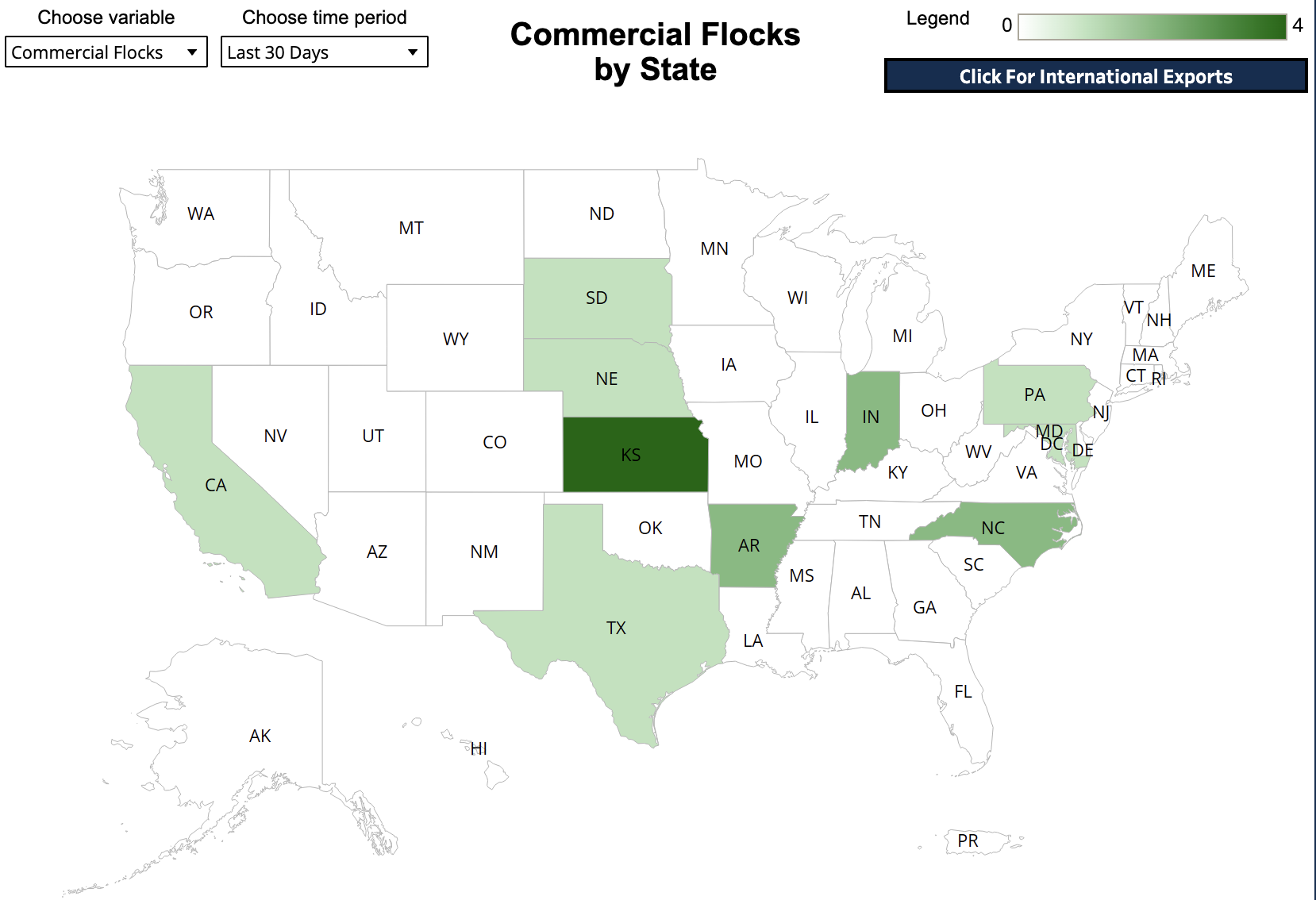
Kansas is suffering from the worst outbreak of highly pathogenic avian influenza in the country, with nearly 414,000 birds affected, according to the U.S. Department of Agriculture.
HPAI, an umbrella term for avian influenza that includes highly contagious strains such as H5 and H7, is considered a low public health risk, although it can pass to humans through birds and dairy products from infected cattle, according to the U.S. Centers for Disease Control and Prevention.
“H5 bird flu is widespread in wild birds worldwide and is causing outbreaks in poultry and U.S. dairy cows with sporadic human cases in U.S. dairy and poultry workers,” according to CDC.
As of Friday, there are four affected commercial flocks and six affected backyard flocks reported in Kansas, according to the U.S. Department of Agriculture. Avian influenza kills almost 100% of the birds it infects.
The bulk of the infected birds, about 380,000, in Kansas were reported to be in a commercial operation in Pottawatomie County, USDA reports said.
In a map highlighting outbreaks across the nation, Kansas is the only state showing the most severe reports during the past 30 days. It is followed by Indiana, with about 87,000 birds affected, including two commercial flocks and five backyard flocks.
Kansas has not had a reported instance of avian bird flu in a human, according to CDC records. Since 2024, there have been 74 reported bird flu cases in humans and two deaths.
This year’s outbreak is similar to those during the last few years, said a spokeswoman for the Kansas Department of Agriculture.
“December and January have been the months when we have seen the highest number of positive cases since this outbreak began in 2022,” said Heather Lansdowne. “The winter of 2023-2024 was more active than this year, both in total cases and in number of birds affected. We are hoping this year follows the trajectory of those years and we begin to see a decline in cases moving forward.”
This year’s outbreak has spread primarily from migrating wild waterfowl, she said. The agency has encouraged poultry farmers and others to protect their birds from contact with migratory birds and their habitats.
“We have been promoting these actions to poultry owners from the start of the outbreak, both in public information and directly through veterinarians, extension agents, 4-H and FFA programs, to poultry owners we have through our systems, etc.,” Lansdowne said.
When the state discovers birds positive for avian flu, they work directly with the business owner to develop a response plan that includes a quarantine and long-term recovery plan, she said.
_ _ _
Story via Kansas Reflector