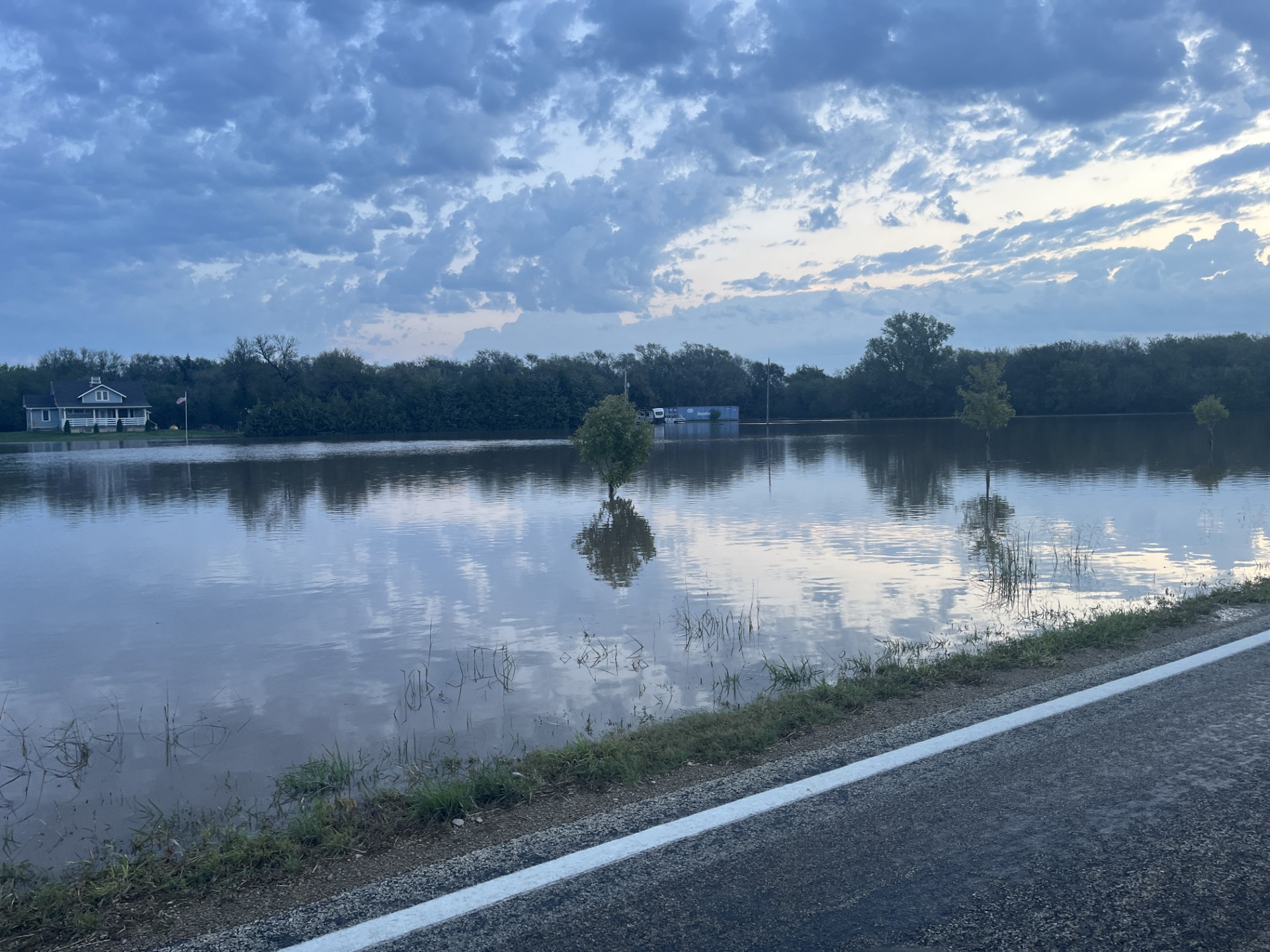
Saline County remains under a Flood Warning issued by the National Weather Service.
According to Saline County Emergency Management, heavy rainfall of up to 12 inches has caused widespread flooding across the western half of the county, with rising river levels expected to continue through Wednesday.
Current River Conditions:
Mulberry Creek (Salina): Expected to crest near 26.5 ft – moderate flooding, possible evacuations.
Do not attempt cleanup until waters recede. Entering flooded buildings too early risks injury, electrocution, or illness.
Stay out of standing water. It may contain debris, bacteria, or downed power lines.
Wear boots, gloves, and masks.
Document all damage with photos or video before cleanup.
Ensure electricity is shut off at the main breaker before entering.
Ventilate and remove wet items quickly to prevent mold.
Are you READY?
Safety Recommendations:
TURN AROUND, DON’T DROWN – never attempt to drive through flooded roads.
Know your risk. Check if your home or workplace is in a flood-prone area.
Have an emergency kit ready with essentials: water, food, medications, flashlight, batteries, and important documents.
Stay out of floodwaters. They can hide debris, downed power lines, or dangerous currents.
Avoid walking through moving water; as little as six inches can knock an adult off their feet.
Secure outdoor items that could become airborne due to high winds.
Avoid unnecessary travel during periods of severe weather, especially if snow reduces visibility.
Monitor local weather updates frequently and have multiple ways to receive weather alerts, including NOAA Weather Radio, local news, and emergency notifications.