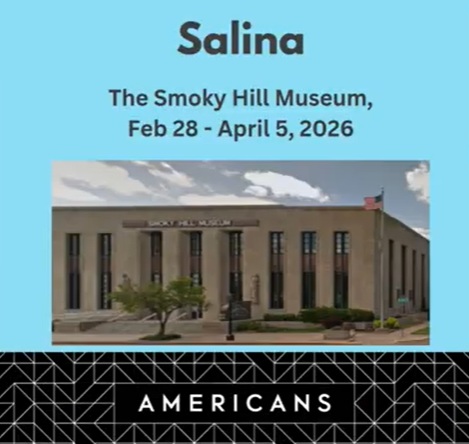
Salina is the fifth of seven cities across Kansas where a traveling Smithsonian Institution exhibit will make an extended stop.
After already stopping in Lawrence, Highland, Wichita, and Mayetta, Americans will set up shop at the Smoky Hill Museum beginning next week.
Americans is a traveling exhibition from the Smithsonian’s Museum on Main Street and the National Museum of the American Indian. It explores how deeply intertwined American Indians are in the culture of the United States.
American Indians are less than one percent of the population, yet images of Indians are everywhere. From imagery on commercial products and professional and high school sports mascots, to classic Westerns and episodes of Seinfeld and South Park, we are surrounded by American Indian imagery. Indian names are everywhere too, from state, city, and street names to the Tomahawk missile.
Pervasive, powerful, at times demeaning, the images, names, and stories reveal the deep connection between Americans and American Indians as well as how Indians have been imbedded in unexpected ways in the history, pop culture, and identity of the United States.
The exhibition highlights the ways in which American Indians have been part of the nation’s identity since before the country began and offers a new way of understanding a few familiar events:
- Thanksgiving was a modern invention.
- Pacahontas was a key figure in the country’s founding
- The trail of Tears was a vast national project that reshaped the entire country.
- Little Bighorn was the moment when, after killing 200 American soldiers, Indians became the country’s unofficial mascots.
Americans surrounds visitors with images and objects from popular culture and delves into these historical events. The exhibition invites visitors to explore this complicated history and to share local stories about Native American history and culture.
Americans has been in Mayetta at the Prairie Band Potawatomi Nation since January 10th, and will be there until Sunday until it leaves for Salina. The exhibit will then be on display at the Smoky Hill Museum February 28th through April 5th.