A camera in the sky might be one of the best tools for the soil beneath our feet.
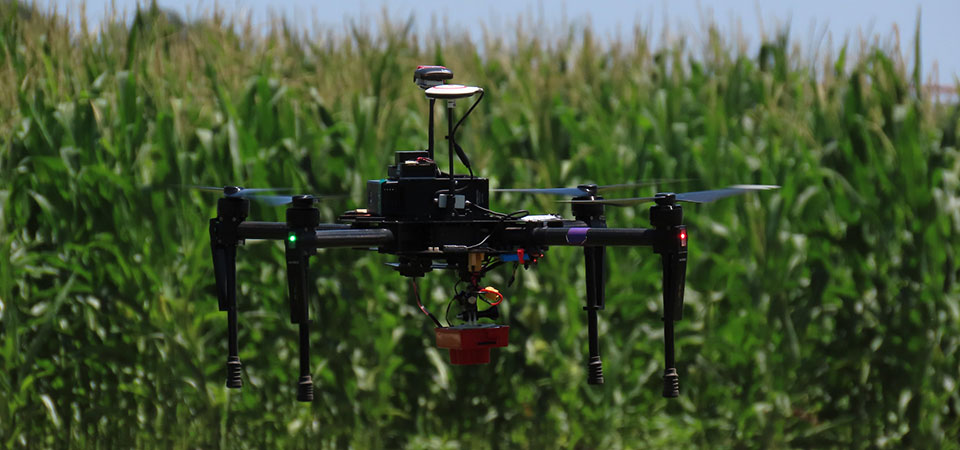
In fact, Kansas State University researcher Deepak Joshi believes remote sensing — using drones, satellites and ground sensors — can give farmers a clearer, more detailed look at what’s happening across their fields than ever before.
“Each field is unique,” Joshi said. “Remote sensing helps us understand the spatial variability — soil types, moisture, nutrient levels and disease pressure — that traditional scouting can’t always capture.”
Joshi and his team at K-State are leading applied research to connect data from sensors to practical decisions on Kansas farms. By using light reflected from crops, remote sensing can reveal signs of stress, nutrient deficiency, or disease long before they’re visible to the human eye.
“It’s a precise, real-time picture of crop health and performance,” he said.
At the university’s Flickner Innovation Farm, Joshi is conducting on-farm trials to evaluate how drone and satellite imagery can guide nutrient application and irrigation decisions.
“One of the most rewarding moments is when a map from a drone flight pinpoints a stress zone we could not detect visually — and a corrective action makes a difference in yield,” Joshi said.
Joshi said the technology is only as powerful as the systems that interpret it. His work focuses on integrating data from drones, satellites and ground-based sensors into artificial intelligence models that can automatically generate insights for producers.
“In the future, we envision automated pipelines where drones, satellites and on-the-ground sensors work together, and AI provides near-real-time recommendations for farmers,” Joshi said.
While the potential is significant, challenges remain.
“Part of the work is building confidence,” he said. “Farmers need to see consistent value in the tools, feel secure about their data, and be able to interpret results with ease, our goal is to make remote sensing practical, reliable and accessible for every producer, regardless of operation size,” Joshi said.
As Kansas agriculture faces increasing challenges from weather variability and input costs, remote sensing offers producers a new advantage: the ability to see what’s coming before it becomes a problem. For Joshi, that’s the future of sustainable farming. “When we can visualize crop stress in time to act, that’s when technology becomes truly valuable,” he said.
For more information about K-State’s precision agriculture research or to hear from Joshi, visit Agriculture Today.