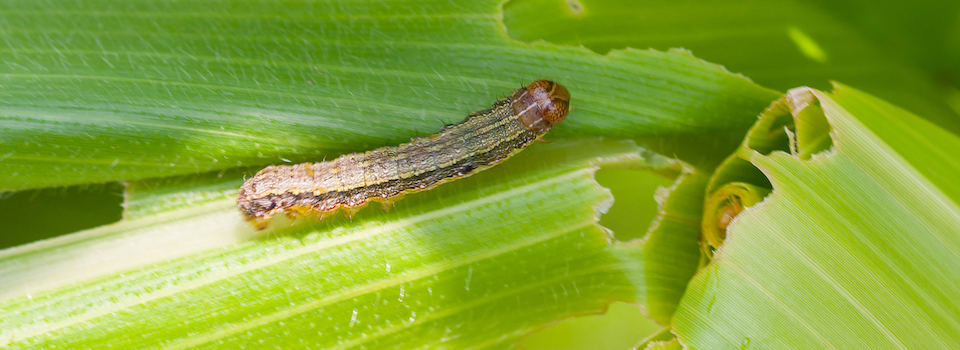
As recent harvests and scouting reports may indicate, armyworms and fall armyworms seem to become a more serious problem for Kansas farmers each year.
For those who may have experienced problems with the insects this year, Kansas State University crop entomologist Jeff Whitworth and agronomist Tina Sullivan say it’s a good idea to understand the issue and develop tactics for tackling future infestations.
Whitworth said the start of any good management program involves early scouting.
“Start by periodically monitoring whatever the vulnerable area you are worried about is to detect any infestation while the ‘worms’ are still small and have not yet caused much damage,” Whitworth said.
When scouting, it’s important to know the thresholds that signal when action should be taken.
“Generalized thresholds are four to five larvae per square foot,” Sullivan said.
Usually two to four generations of armyworms per growing season means monitoring should continue until temperatures turn cold, approximately mid-20 degrees Farenheit for two hours, Whitworth said.
While armyworm infestations cannot be totally prevented, Whitworth recommends traps available to deploy around target areas.
“These traps will not control or prevent an infestation, but they can catch the moths to indicate when these adults are actually flying and thus depositing eggs,” he said.
“Armyworms have chewing mouth parts, thus they bite and chew their food, most often a grass crop like sorghum, brome, wheat, fescue or other,” Whitworth said. “Armyworms eat off the above ground green portion of whatever grass the moth deposited the eggs on.”
Once a field is infested with armyworms, there are some options for eradicating them with insecticides.
“There are several insecticides labeled for armyworm control. Most work quite well if utilized according to the label,” Whitworth said.
Sullivan added that forage stands are especially vulnerable.
“Our forage stands tend to be the most damaged year after year. The cost of insecticide applications is often more economical compared to the seed and planting costs of re-establishing any of our forage fields – tame or native,” she said.
Maintaining a healthy forage stand, Sullivan noted, comes down to good fertility, timely grazing and cutting schedules, and awareness of weather conditions.
More information on crop production and other agriculture-related topics is available at local extension offices in Kansas