A historic hotel in Abilene that Dwight Eisenhower frequented could get refurbished.
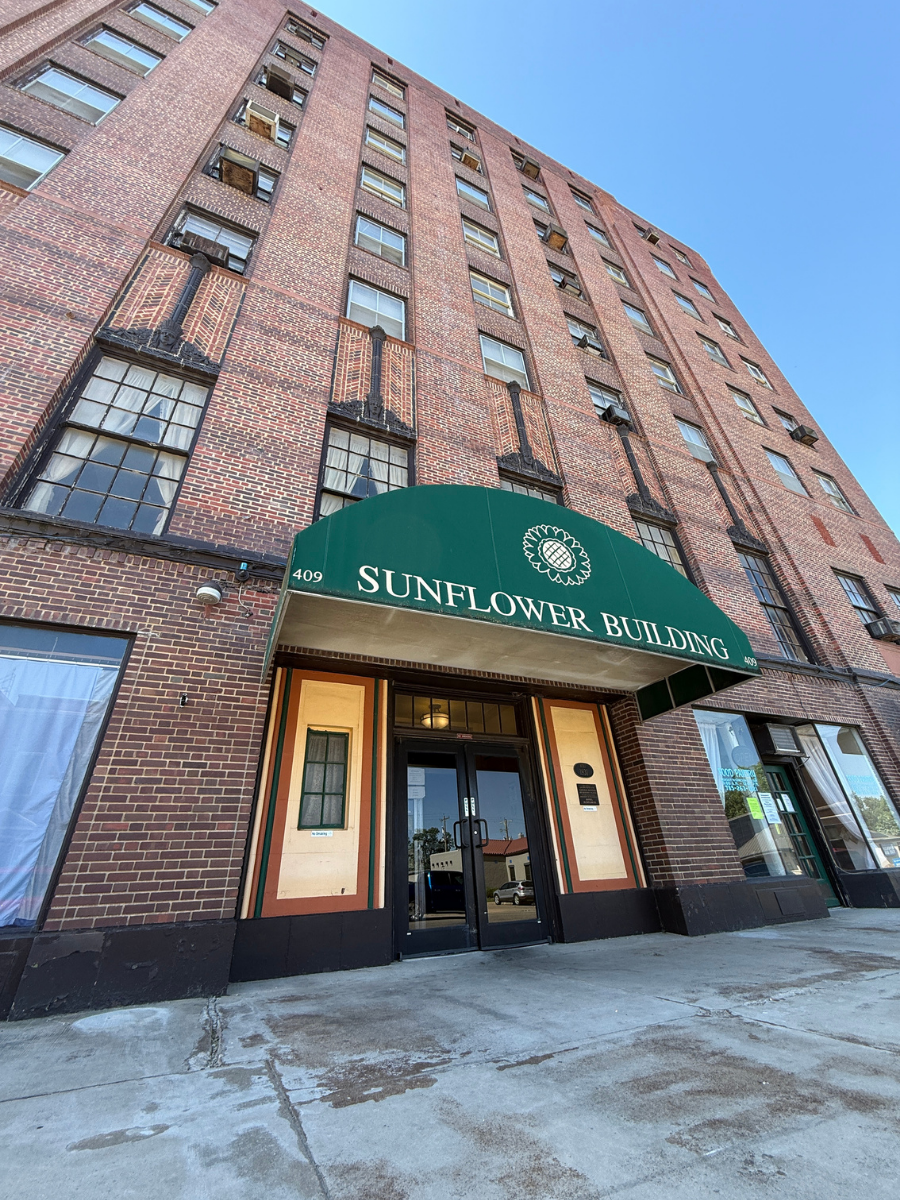
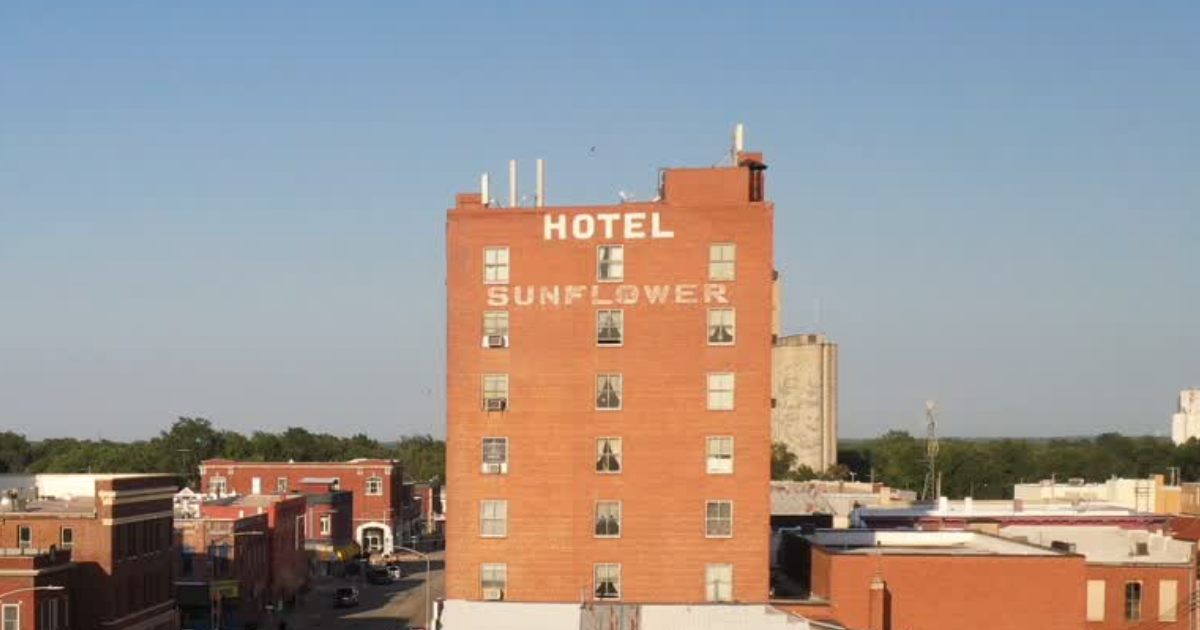
What was first named the Hotel Sunflower, located at 409 N.W. 3rd Street in Abilene, was built in 1931. President Dwight D. Eisenhower frequently visited the hotel, stayed in a “presidential suite” on the sixth floor, and watched his 1952 homecoming parade from a balcony of the hotel.
While it once operated as a premier hotel, the building has been renovated and currently operates as the Sunflower Apartments.
According to the Driving Dickinson County organization, Kansas City-based real estate development firm is seeking state tax credit funding to rehabilitate the Sunflower Hotel in downtown Abilene, an eight-story historic building that currently houses many adults and children and sits at the heart of the city’s commercial corridor.
Flint Hills Holdings, LLC, founded in 2014 by CEO Tony Krsnich, has submitted a Low-Income Housing Tax Credit (LIHTC) application to the Kansas Housing Resources Corporation (KHRC) for the project. The application represents a multi-million dollar investment in a building that is in serious physical decline, including the absence of a sprinkler system, and in urgent need of rehabilitation.
The Sunflower Hotel is more than a downtown address. The building has housed low-income residents for decades and currently provides essential support services to some of Abilene’s most vulnerable community members, including a food bank and clothing bank on the lower level. Without intervention, it could become uninhabitable, displacing many residents in a county already facing a documented housing shortage.
Both the City of Abilene and Driving Dickinson County have submitted formal letters of support to KHRC urging approval of the application.
Mayor Brandon Rein, who signed the city’s letter on behalf of the Abilene City Commission, didn’t mince words about what’s at stake. “When I look at the Sunflower Hotel today, my biggest concern if this application is not approved is the long-term future of the building itself and the people who call it home,” Rein said. “The Sunflower is an important part of downtown Abilene, and without significant investment, there is a real risk that the building could continue to decline. That would not only impact residents, but also create challenges for surrounding businesses and the downtown area as a whole. Projects like this are difficult to make financially viable in rural communities, and programs like LIHTC can be one of the few realistic tools available to help preserve important housing and historic structures.”
Krsnich’s plans go beyond code compliance. His vision includes restoring the Sunflower’s historic lobby to its original grandeur, honoring the era when President Dwight D. Eisenhower, Abilene’s most celebrated native son, was known to stay at this very hotel.
That connection to Eisenhower’s legacy transforms the project from a housing rehabilitation into a tourism and heritage asset, complementing everything Abilene has built around its most famous name.
Flint Hills Holdings is proposing a 42-unit mixed-income complex with amenities currently not available to residents, including upper floor laundry facilities, central air conditioning, and common gathering spaces throughout. Approximately 75% of units will be restricted to households earning around $40,000 a year, with the remaining 25% offered at market rate.
Krsnich said the stakes of this particular project hit differently than most. “When we look at a project, we usually ask what this building could become. With the Sunflower, it was the first time I found myself asking what happens if it doesn’t. You’ve got a food bank, a clothing bank, real resources serving people on the lower level and residents living there right now who won’t have anywhere to go without investment. We’re approaching this as a mixed-income project. We want to provide something for everybody.”
Flint Hills Holdings brings a strong track record of historic preservation and adaptive reuse projects across the Midwest, with completed developments in Kansas, Missouri, Oklahoma, Nebraska, and Iowa. Notable projects include the Poehler Lofts and Cider Gallery in Lawrence’s Warehouse Arts District, the New Hampshire Lofts, a 48-unit affordable senior housing project in Lawrence, and the Lee Hardware Lofts in Salina, which converted a historic warehouse into 53 apartments.
The firm specializes in complex financing structures, frequently utilizing LIHTC, tax abatements, and grants to make projects viable in markets where private capital alone won’t go.
Driving Dickinson County CEO Natalie Muruato submitted a formal letter of support alongside the City of Abilene and spoke to why this project matters beyond the building itself.
“Tony Krsnich isn’t just proposing a renovation. He has a genuine vision for what this building can become and a real commitment to the people who live there today. The support services housed in that building matter to this community, and this project protects them while creating a place residents can be proud to call home. For us, the most exciting part is what comes next. A rehabilitated Sunflower Hotel doesn’t just improve lives inside those walls. It sends a signal to every investor looking at downtown Abilene that this community is ready.”
The KHRC review committee is expected to render a decision on the application in the coming months.