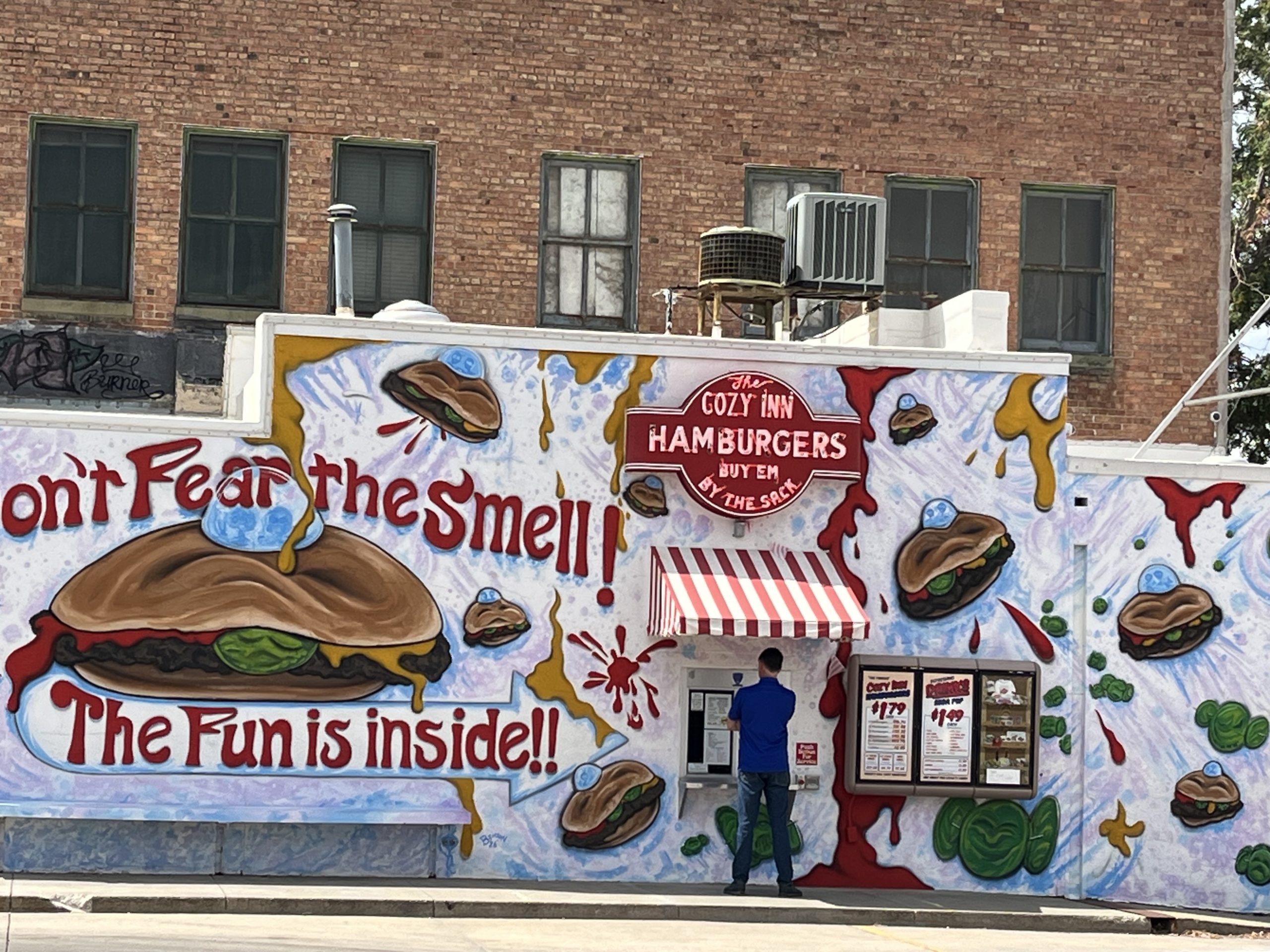
The City of Salina is preparing to overhaul its sign ordinance after losing a long-running legal battle over a mural at the Cozy Inn restaurant.
Salina City Manager Jacob Wood appeared on the KSAL Morning News Extra Tuesday morning. Among other things he discussed the city’s strategy following rulings from the district court and the 10th Circuit Court of Appeals. Both courts concluded that the city’s definition of a “sign” was unlawful under the First Amendment.
Wood explained that the primary motivation behind appealing the district court’s initial decision was not the Cozy Inn itself, but rather the broader impact on local enforcement.
“The district court said our definition of ‘sign’ was unconstitutional or unlawful,” Wood said. “Our definition of ‘sign’ is pretty standard—there are 40 or 50 cities across the state that have the same definition. When you say the definition of sign is unlawful, it makes it really hard for us to understand how we move forward with any sign code at all.”
Wood noted that the dispute with the Cozy Inn had largely been settled separately through an agreement allowing the restaurant to maintain its wall artwork. However, following the 10th Circuit’s decision upholding the lower court ruling, Wood acknowledged the city has no choice but to adjust its local regulations.
The legal battle leaves city officials facing uncertainty regarding how wall artwork and commercial signage can be regulated going forward. Wood indicated that future regulations on building walls will likely be far less restrictive.
“Whatever we regulate in terms of signs is going to be a lot less than what we do today,” Wood noted, adding that regulating anything directly painted on or attached to a building wall will be difficult. The city may instead focus its regulatory efforts on off-premise, monument, or right-of-way signs.
To replace the invalidated code, city staff plan to examine federal standards—such as Federal Highway Administration guidelines—to establish a legally defensible definition of a sign.
The lawsuit originated after Salina Arts and Humanities Director Brad Anderson reported a newly painted wall message at the Cozy Inn, triggering code enforcement. The city initially paused the project and hired a consultant for approximately $40,000 to review the sign code, but the process was interrupted when the business filed suit. Wood estimated that total litigation costs for the city have exceeded $800,000.
Moving forward, city staff will work quickly to draft a new ordinance, though it remains to be determined whether the proposed changes must go through the Planning Commission before reaching the Salina City Commission.
Wood emphasized that the city must act carefully to avoid further legal challenges. “We need to be cautious about how we do it, but we need to move as quickly as we can,” he said.