Pilot students at Kansas State University Salina can now save time and money while earning one of their flight ratings, as the Federal Aviation Administration has granted the campus self-examining authority to award instrument ratings.
K-State Salina students can now earn their instrument rating after passing an end-of-course test administered by the campus’s chief flight instructor or assistant chief flight instructor, rather than a separate practical test with a Designated Pilot Examiner, or DPE, as in the past.
Self-examining authority means that students gaining their instrument rating will no longer have to wait on DPE availability. Students can test when they are ready, not when an outside examiner has an opening. This means fewer delays and a faster path to the rating.
This designation also helps students save money on fees, since they previously had to pay DPE fees. Students no longer pay for a separate practical test, which in some cases can save each student up to $1,000.
K-State Salina also has self-examining authority for students earning their private pilot certificate. The campus is one of only a handful of universities across the country to earn self-examining authority from the FAA.
“Examining authority is earned, and this designation is a testament to what we have built at K-State,” said Tysen Pina, aviation department head. “Our students have worked so hard to improve every day, and they have demonstrated remarkable knowledge and grit during this process. More than 100 students over the last two years passed the practical exam on their first try. This speaks to the overall excellence of not just our students but their flight instructors and aviation faculty as well.”
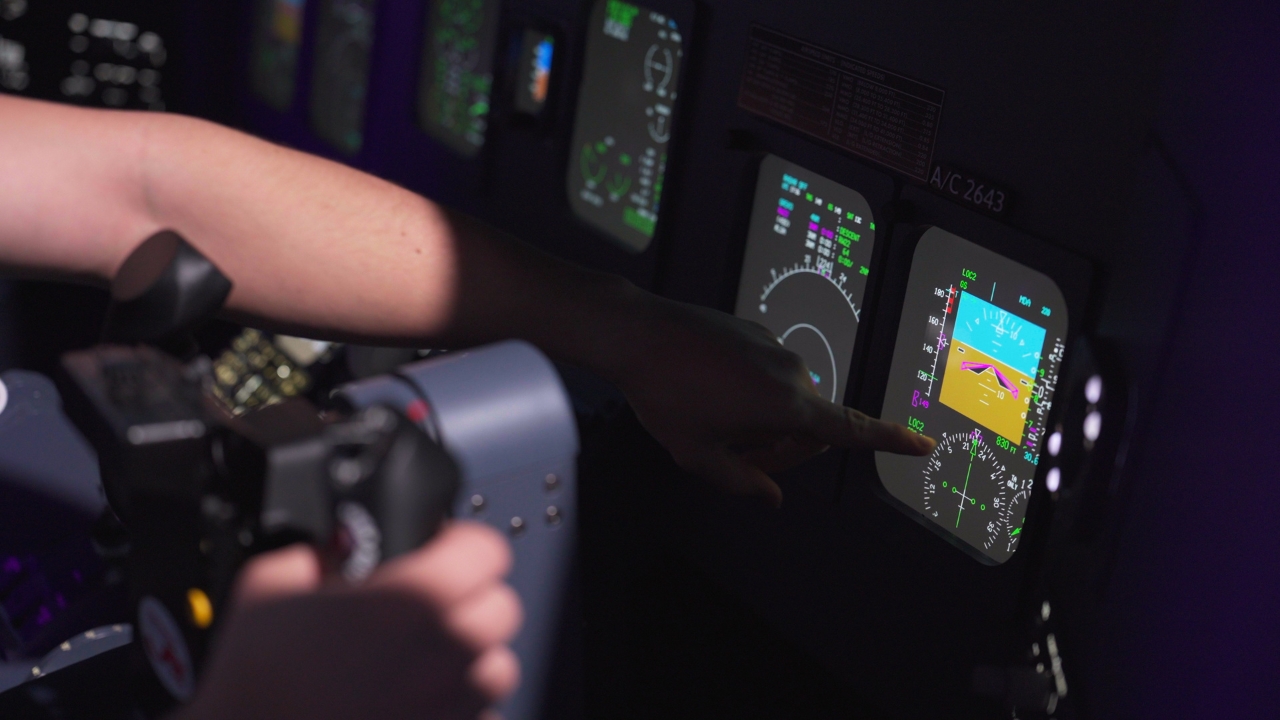
An instrument rating allows pilots to navigate and operate aircraft using flight instruments rather than outside visual references, enabling flight in a wider range of weather conditions. To advance in the rating, students must complete 35 hours of flight training flying an aircraft using only the plane’s instruments before taking the practical test.
As one of the premier flight education and training programs in the country, the FAA has entrusted the K-State Salina aviation program with properly examining students gaining their instrument ratings and advancing them on to the next flight rating level once they have become proficient in their flight instruction.
To obtain the self-examination designation from the FAA, K-State Salina needed to teach the instrument course for at least 24 consecutive months and achieve a 90% first-attempt pass rate during the same 24-month period.
In addition to their top-notch education, students in K-State Salina’s professional pilot degree program put the skills they learn in the classroom to the test every day by also flying alongside a certified flight instructor inside an aircraft.
As pilots progress through their training, they earn what are called ratings. To become an FAA-certified pilot who is eligible to fly large aircraft for airlines, as well as other types of aircraft and careers, they must pass five different flight ratings and complete 1,000 flight hours, as K-State Salina is a Restricted Airline Transport Pilot, or R-ATP, certified university.
The instrument rating is one of several certifications students earn as they progress through the professional pilot program. K-State Salina students complete a structured sequence of flight ratings and academic coursework before their education and training are complete.
“Our program continues its rich legacy as being one of the best flight programs in the country,” Pina said. “We are committed to developing pilots who are truly superb in every aspect of being a pilot. From academics to flight instruction to aspects like safety, students don’t just come out of Salina with a degree and the ability to be a pilot. They are qualified, experienced, mature pilots who have learned from their mistakes and are ready to compete for careers in the aviation industry.”