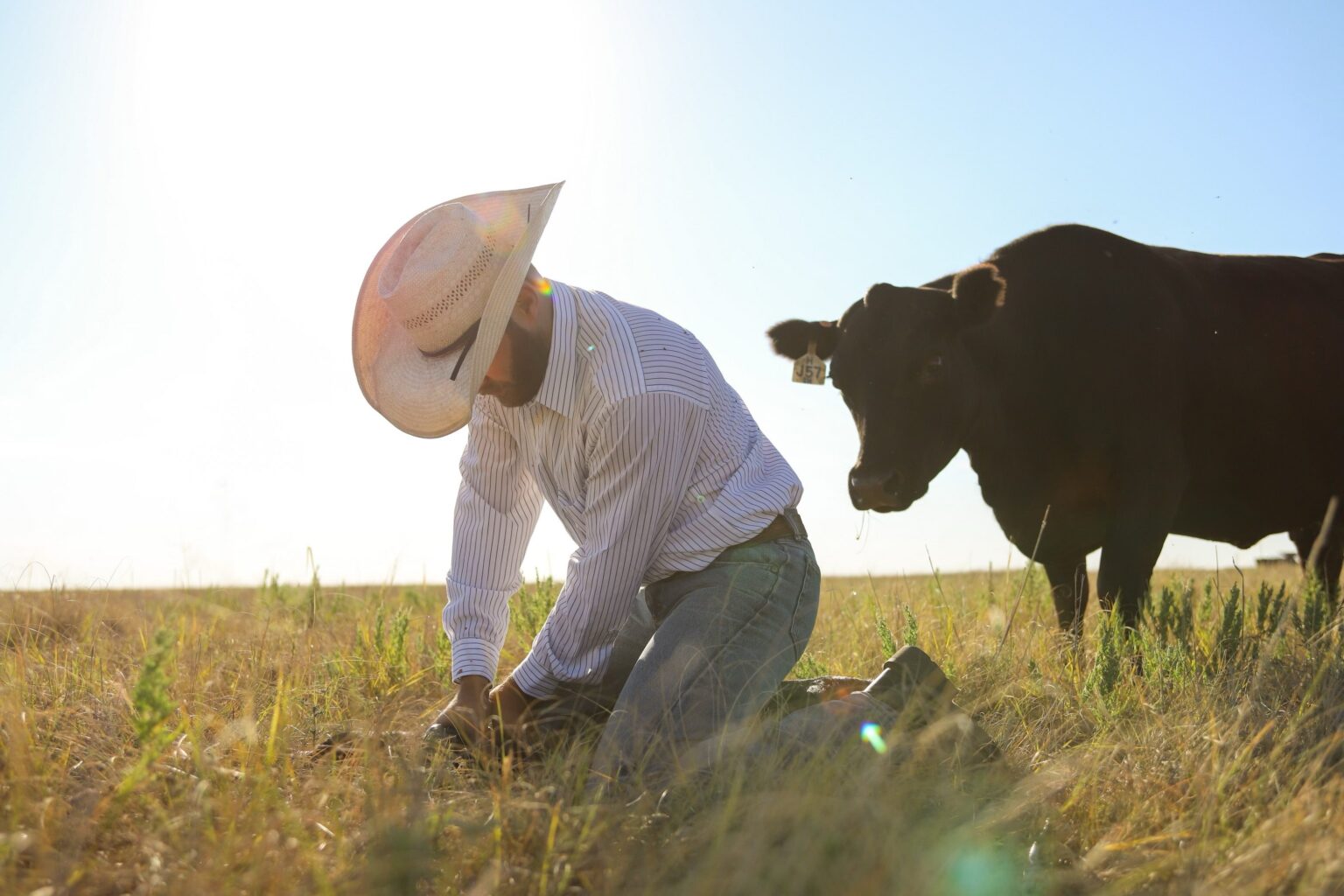
Southwest Kansas rancher Cole Gardiner is in recovery mode after a wildfire tore through 35,000 acres and kicked around 200 cattle.
Gardiner Angus Ranch, located near Ashland, has been in his family for 150 years. In his lifetime, Gardiner remembers only one other fire that was as devastating, the Starbuck Fire that occurred about nine years ago.
The Ranger Road fire, which started in Oklahoma on Feb. 17 and spread into southwest Kansas counties, burned more than 300,000 acres in both states. Winds gusted up to 68 miles per hour, Gardiner said, which allowed the fire to spread rapidly.
The fire burned through “quite a bit” of the Gardiner ranch and consumed pasture grass, destroyed fencing and killed cattle, Gardiner said.
“Grass will take awhile to replenish itself, I suppose, but hopefully when spring rains come, we’ll get along fine,” Gardiner said. “We’ll need to repair fence. We were fortunate enough to not lose much of our seed and hay, but a lot of folks did lose most of their seed and hay and lost all of their fencing.”
Although he takes as many steps as possible to fight off fire danger, Gardiner said doing so is difficult in an area known for its low humidity and lack of moisture.
“We get told lots about needing to do controlled burns, but A, they’re illegal, and B, once it gets to a certain level of aridity, dryness, when the humidity out here is 10% or less, it’s just anything that is there will catch pretty easily, especially with really high winds,” he said.
Ranchers mow frequently and some engage in controlled burns whenever possible, aided by the local volunteer fire department whenever possible.
“On days like (the Ranger Road Fire), we had breaks and guards and everything in place, but the wind was blowing 68 miles an hour,” Gardiner said. “They found embers in Wichita.”
Wichita is more than 150 miles away from Ashland.
Jason Hartman, state forester with the Kansas Forest Service, said fire danger is still high in the state.
“We won’t really, truly give kind of a sigh of relief until we get the green up,” he said. “That’s really when we can really put fire in the rear view mirror for the year.”
The Ranger Road fire was a challenge due to high winds in addition to lack of winter moisture and low humidity, Hartman said.
“It’s rarely any one factor by itself,” he said. “We had a pretty good growing season. In 2025, late summer and early fall, good moisture grew a lot of fuel for the fires. Then stack that on top of being really dry since then.”
Abrupt wind shifts make conditions “very challenging and very dangerous” for firefighters, most of whom are volunteers.
Gardiner said he and two others who work on the ranch are part of the fire department.
“It’s not a safe environment, but we try to follow a buddy system and do everything as safely as we can, given the circumstances,” he said. During the Ranger Road Fire, they fought for three days, with four or five-hour breaks for a shower and nap.
The Ranger Road Fire forced the evacuation of Ashland, Englewood, Herndon and Liberal for short periods of time.
Since then, a few smaller fires have broken out, Gardiner said, but they’ve been easily controlled.
The state remains on high alert, Hartman said. The Forest Service Division of Emergency Management and the fire marshal’s office coordinates and watches for areas of concern and whether state resources should be pre-positioned to speed the response.
Coordination includes considering needs for aviation assets, water trucks from the Kansas Department of Transportation, additional fire trucks from across the state and more, Hartman said.
Hartman and Gardiner said a lot of the preparation is trying to get the word out about volatile fire conditions.
Gardiner said he understood the Ranger Road fire started from a city burn pit and was the result of escaped embers.
“We’re getting more of these scenarios of the dry humidity, the high winds, the wind shifts, coupled with available fuels,” Hartman said. “Definitely the fire environment is becoming more volatile.”
Hartman said he hears from fire departments frequently that fires were never as big or intense as they are now.
Gov. Laura Kelly issued a state disaster declaration in February, which makes emergency services available. The Legislature then ratified the emergency declaration and extended it through March 25.
People have been making donations of hay and other items to farmers and ranchers who were affected.
Cash donations can be made to the Ashland Community Foundation or to the Stockgrowers State Bank, where 100% of donations will be distributed. Hay and feed can be delivered to Ashland Feed & Seed, (620) 635-2856, or Shaw Feedyard, (620) 805-4682.
_ _ _
Story via Kansas Reflector
Photo: Ashland Rancher Cole Gardiner, shown here tagging a calf, is on alert for wildfires as a recent fire burned through 35,000 acres and killed about 200 calves. (Photo submitted by Cole Gardiner)